


Office Coffee Supplies Checklist & Restocking Guide
Quick Answer: A practical office coffee supplies checklist starts with cups and matching lids, then adds sleeves, stirrers, napkins, sweeteners, and a small back-stock buffer. Standardize as few cup sizes as the menu allows, test every cup-lid-sleeve combination together, and set a reorder point from actual daily use rather than guesswork.
An office coffee station fails less often because of the coffee than because one small supply runs out or does not fit. The best setup treats cups, lids, sleeves, napkins, stirrers, condiments, storage, and replenishment as one system. This guide helps workplace managers, office administrators, hospitality teams, and shared-space operators build that system without turning a breakroom into an overfilled stockroom.
What belongs on an office coffee supplies checklist?
Organize supplies by the job they perform. That makes shortages easier to spot and keeps decorative extras from hiding operational gaps.
| Supply group | Core items | What to verify | Common failure |
|---|---|---|---|
| Drink container | Hot cups in the sizes your machine or menu supports | Fill line, grip area, dispenser fit | Too many overlapping sizes |
| Closure | Lids matched to each cup rim | Snap fit on every delivered lot | Ordering by ounce size alone |
| Heat handling | Sleeves where the cup and beverage require them | Taper, grip position, lid clearance | Sleeve slides or blocks the lid |
| Service | Stirrers, napkins, sweeteners, creamers | Reach, visibility, refill frequency | Open cartons clutter the counter |
| Back stock | Sealed reserve cases and labeled open stock | Dry storage and first-in, first-out rotation | No defined reorder point |
Quotable rule: Cup size does not prove lid compatibility; the delivered cup and lid must be tested as a pair.
Choose a small, compatible cup system
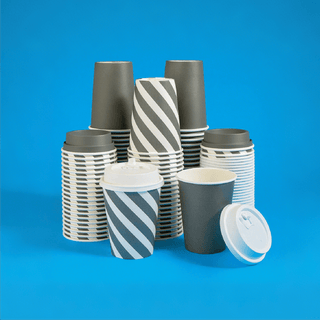
Start with beverage recipes and dispenser output, then choose the fewest practical sizes. A basic workplace may need only a small cup and a regular cup. A client-facing lounge or high-volume office may justify a third size. If you are still deciding, compare typical applications in the coffee cup sizes guide, then review the current coffee cups collection.
Do a physical fit test before buying a full restock cycle. Fill one cup with the intended hot beverage, apply the lid, hold it at the seam, walk with it, and check for rocking, leaks, rim distortion, and sleeve movement. For sleeve selection, use the separate cup sleeve fit and heat guide.
Quotable rule: A smaller standardized assortment is usually easier to replenish accurately than a larger assortment with partially interchangeable parts.

Set par levels from daily use
Count withdrawals or discarded sleeves for five normal workdays. Exclude unusual all-hands events unless those events are part of the regular service pattern. Calculate each item separately:
Use the formula as a starting point and revise after two restock cycles. Lids, cups, sleeves, and napkins rarely disappear at exactly the same rate, so do not assume one case count covers the whole station. Case-pack and lead-time information also matters; confirm current delivery expectations on the shipping information page before setting a reorder threshold.
Quotable rule: The reorder point should reflect consumption during the next delivery window, not the visual emptiness of the front dispenser.
A six-step restocking workflow
- Count at the same time. Pick a repeatable weekday and count front-of-house stock plus sealed reserve stock.
- Record by item, size, and fit family. Keep 10 oz lids separate from 12 oz lids even when they look similar.
- Refill the service zone first. Add only what fits cleanly in dispensers; keep opened extras in labeled bins.
- Rotate reserve cases. Move older sealed stock forward and keep single-service items protected from splash, dust, and handling.
- Compare to the reorder point. Order when available stock will not cover expected use through the next delivery window.
- Log exceptions. Note visitor days, events, machine downtime, or a new drink size so the next order is not based on a false pattern.
The FDA Food Code describes storage and handling expectations for single-service articles, including keeping them protected from contamination. Workplace teams can use that principle when choosing closed bins, dry shelving, and refill practices; consult the FDA Food Code and applicable local requirements for the authoritative rules that apply to a food-service operation.
Three office coffee supply options to test
The products below were selected because their current Active variants include eligible HWC SKUs with available inventory. Fit must still be checked against the lids and equipment used at your location.
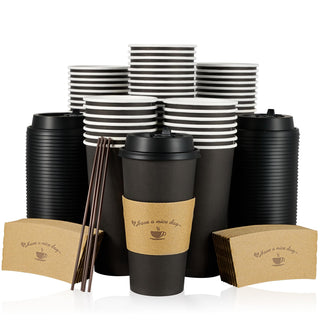
Black paper coffee cups
10, 12, and 16 oz HWC variants support a standardized hot-cup program.
Kraft cup sleeves
Corrugated paper sleeves can be tested for taper, grip, and lid clearance.
Classic white napkins
Choose the pack format that fits the station refill rhythm and reserve storage.

Office coffee station FAQ
How many coffee cup sizes should an office stock?
Stock the fewest sizes that cover the actual beverage program. Many offices can simplify to two sizes, while higher-volume or client-facing service may justify three after a usage review.
How much buffer stock should we keep?
Start with a clearly documented buffer, such as 15–25% above expected use through the next replenishment window, then adjust from real counts. This is a planning range, not a universal requirement.
Can lids be ordered by cup ounce size?
No. Ounce size alone is not a fit specification. Match the correct rim diameter and test the delivered cup-lid combination before broad use.
When should coffee cup sleeves be provided?
Provide them when the cup construction, beverage temperature, and handling test show that an added grip or heat barrier is needed. Confirm that the sleeve remains stable and does not interfere with the lid.
How often should an office coffee station be restocked?
Check high-use items daily and run a full inventory count on a fixed weekly schedule. The right frequency depends on attendance, visitor traffic, storage space, and delivery lead time.
How should single-use coffee supplies be stored?
Keep them dry, protected from contamination, and organized so older stock is used first. Food-service operations should follow applicable local rules and the current FDA Food Code framework.
Final checklist
- One owner for ordering and one visible backup contact
- A documented cup-lid-sleeve compatibility test
- Separate counts for every size and fit family
- Front stock plus protected reserve stock
- A reorder point tied to use and delivery timing
- A short exception log for events and attendance changes
Review the system after two restock cycles. Keep what reduces missed refills and mismatched parts; remove items that add complexity without serving a real beverage or guest need.