
Coffee Cup Sizes for Cafés: 8, 12, 16 or 20 oz?
Quick Answer: For most cafés, 8 oz works for compact milk drinks and small coffees, 12 oz is the most flexible everyday size, 16 oz fits large drinks, and 20 oz should be added only when the menu and demand justify it. Start with the fewest sizes that cover your actual recipes, then test fill level, lid fit, sleeve need, and pickup speed before placing a bulk order.
Choosing coffee cup sizes is an operations decision, not just a packaging decision. Each extra size can add another cup stack, lid match, sleeve decision, menu button, and reorder point. The right range should fit the drinks you sell while keeping the service line easy to run.
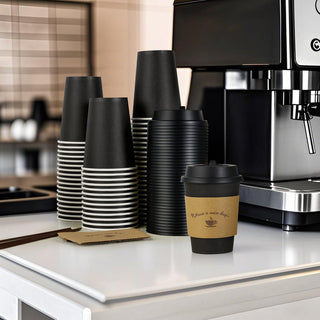
This guide focuses on disposable hot-paper-cup planning for cafés, bakeries, office beverage stations, caterers, and concessions. If you are building the full counter flow, pair it with our coffee station setup guide. For current formats, browse the coffee cups collection.
Coffee cup sizes at a glance
| Nominal size | Approx. metric volume | Useful menu role | Operational watch-out |
|---|---|---|---|
| 8 oz | 237 mL | Small drip coffee, compact latte, hot chocolate, kids' or sampling menu where appropriate | Confirm the recipe still leaves practical headspace after milk or toppings. |
| 12 oz | 355 mL | Standard coffee, latte, tea, and most everyday takeaway orders | Often the best baseline, but do not assume it fits every lid family. |
| 16 oz | 473 mL | Large coffee, tea, seasonal drinks, and longer-service occasions | A heavier filled cup may need a sleeve and a secure handoff routine. |
| 20 oz | 591 mL | Extra-large drinks or menus with a proven high-volume demand | Add only when sales justify the space, lid, and inventory complexity. |
Measurement note: Metric values are rounded from the U.S. fluid-ounce conversion published by the National Institute of Standards and Technology. A labeled cup capacity is not the same as a recommended serving fill. Ice, foam, whipped toppings, transport movement, and lid geometry can all change the usable fill.
How to match each size to your menu
Use 8 oz when the drink should stay compact
An 8 oz coffee cup can keep a small drink visibly distinct from the standard size. It is useful when a smaller recipe is intentional, not when staff must underfill a larger cup and explain the empty space. The decision test is simple: make the real recipe, close the lid, and carry it through the actual handoff path.
Use 12 oz as the flexible core size
A 12 oz coffee cup often covers the broadest range of everyday hot drinks with the least menu friction. For a new or simplified beverage program, it is the logical size to test first. A strong core size should cover several recipes without forcing staff to improvise fill levels.
Use 16 oz for a meaningful large option
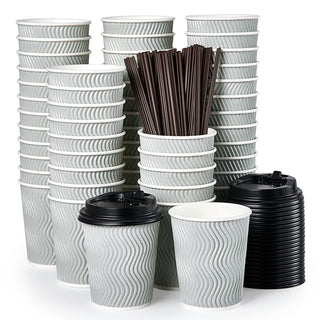
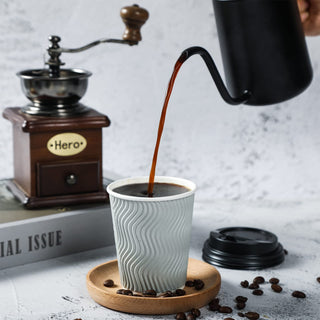
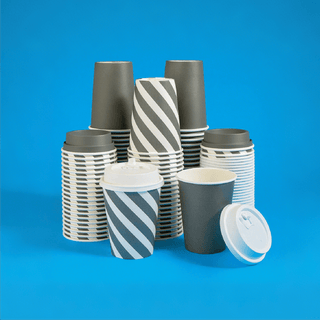
A 16 oz coffee cup creates a clear step up from 12 oz and can accommodate larger brewed drinks, teas, and seasonal recipes. Test whether the filled cup feels stable with the intended lid and whether a sleeve is needed for the service conditions. Current gray ripple-wall paper cups provide an 8/12/16 oz family for operators who want related formats.
Use 20 oz only when demand earns the complexity
A 20 oz option can serve an extra-large menu tier, but it also occupies more storage and may create a separate reorder pattern. Review order data or run a limited test before making it permanent. The largest cup is not automatically the most useful cup; it is useful only when a real menu item and repeat demand support it.
A practical two- or three-size starting lineup
| Operation | Suggested test lineup | Why it can work | What to validate |
|---|---|---|---|
| Small café or bakery | 8 + 12 + 16 oz | Creates clear small, regular, and large tiers. | Whether 8 oz demand warrants its own stock position. |
| Office coffee station | 8 + 12 oz | Keeps self-service choices and storage simple. | Refill frequency and spill rate during peak use. |
| Catered breakfast | 8 or 12 oz only | One main size speeds setup and replenishment. | Event length, refill plan, and sleeve placement. |
| High-volume takeaway menu | 12 + 16 + optional 20 oz | Centers the range on common larger formats. | Whether 20 oz sales offset extra storage and lid complexity. |
These are test lineups, not universal standards. Your final range should reflect recipes, customer demand, storage, and supplier pack configuration. Operators needing larger case quantities can also review Jolly Chef's business solutions.

Four-step cup-size test before bulk ordering
- Map every hot drink. List the finished recipe volume, foam or topping allowance, and whether the drink needs room for customer handling.
- Run a fill test. Prepare each recipe in the candidate cup. Do not judge by the ounce label alone; inspect the real fill line and lid clearance.
- Run a service test. Apply the intended lid and sleeve, carry the cup from production to pickup, and check grip, stability, stacking, and staff speed.
- Standardize and document. Select the smallest useful size range, record which lid and sleeve match each cup, then train staff before the bulk order arrives.
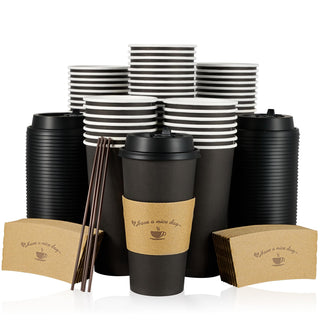
A cup is operationally compatible only after the cup, lid, recipe, and handoff have been tested together. Matching nominal diameters or product descriptions is not a substitute for a physical fit check. For an integrated kit with cups, lids, sleeves, and stirrers, see the black coffee cup sets; separate kraft cup sleeves can support compatible hot-cup workflows after fit testing.


Common sizing mistakes to avoid
- Adding every size at launch: more choice can create more stockouts, lid confusion, and training steps.
- Using nominal capacity as the serving fill: toppings, foam, and movement need practical clearance.
- Assuming lids are interchangeable: confirm the exact cup-and-lid combination before ordering cases.
- Ignoring storage: map case dimensions and counter stack positions before expanding the range.
- Choosing by price per cup alone: include sleeve, lid, waste, and service-time implications in the test.
Frequently asked questions
What is the most common coffee cup size for a café?
There is no universal size for every café, but 12 oz is a practical core size to test. It can cover many standard hot drinks while keeping a visible step between 8 oz and 16 oz options.
Is an 8 oz coffee cup too small?
No—8 oz is useful when the menu intentionally includes a compact drink. It becomes a poor fit only when the recipe, toppings, or customer expectation require more usable volume.
Should a café offer 12 oz and 16 oz cups?
Yes, if those sizes map to distinct standard and large recipes. Test whether the price step, demand, storage, and lid system support both.
When should a café add a 20 oz coffee cup?
Add 20 oz after demand is demonstrated. A limited menu test can show whether the extra-large tier earns enough orders to justify another cup and reorder point.
Can different coffee cup sizes use the same lid?
Sometimes, but never assume they do. Lid compatibility depends on the exact rim specification and product family, so physically test and document every pairing.
How many coffee cup sizes should a new café start with?
Start with two or three sizes that cover the real menu. Add another only when order data or a controlled test shows a clear unmet need.