


Takeout Packaging Materials: How to Choose for Hot, Cold & Delivery
Takeout Packaging Materials: How to Choose for Hot, Cold & Delivery
Quick Answer: Choose takeout packaging materials by food temperature, moisture, transport time, closure, and disposal route. Bagasse and paper formats can suit many hot or greasy foods when the exact product is labeled for that use; plastic can help with visibility and leak control when the exact container is food-contact rated. A material name alone does not prove microwave safety, compostability, or leak resistance.
This guide replaces broad trend claims with a practical decision process for restaurants, caterers, and foodservice teams.
Start with the food and service conditions
| Use case | First checks | Packaging direction | Verify |
|---|---|---|---|
| Hot, saucy entrées | Heat, steam, sauce weight | Vented fiber or rated plastic | Food-contact and temperature instructions |
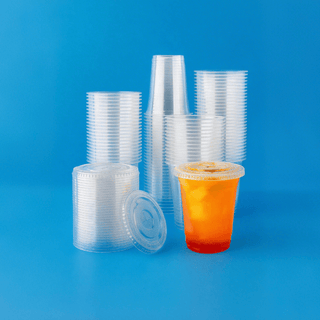
| Cold salads and sides | Condensation, visibility, stacking | Clear lid with rigid base or fiber bowl | Seal fit and condensation |
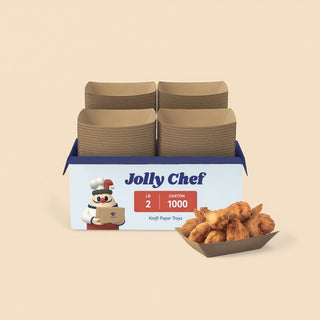
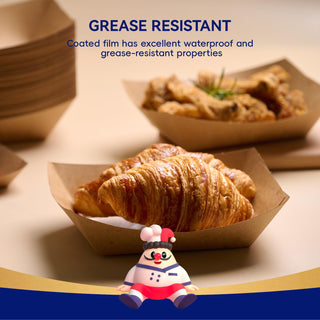
| Greasy fried foods | Oil, crispness, airflow | Grease-resistant paper or vented box | Grease resistance and vents |
| Delivery over 30 minutes | Leaks, movement, reheating | Locking lid or stable clamshell | Closure test with the menu |
Judgment 1: The correct takeout container is determined by the food and journey, not by the word “eco-friendly.”
Compare common materials
| Material | Strengths | Limits | Decision question |
|---|---|---|---|
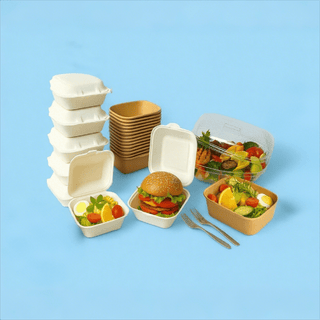
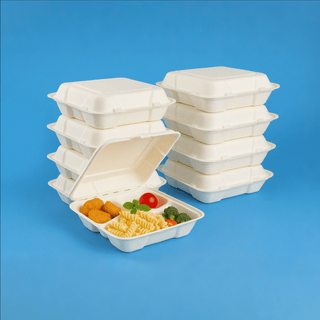
| Bagasse or molded fiber | Paper-like presentation; useful for many hot foods | Moisture and oil performance vary | Is this exact item rated for the food and hold time? |
| Paperboard or kraft | Lightweight for wraps, fries, and bakery | Can soften with steam or wet sauces | Does the liner match the menu? |
| Plastic | Visibility, rigid stacking, closure formats | Resin and temperature limits differ | Is the exact container food-contact rated? |
| Reusable system | Can support a return-and-wash program | Needs collection, washing, and tracking | Can the operation recover and sanitize it? |
Judgment 2: “Compostable,” “recyclable,” and “reusable” describe different systems and disposal instructions.
Five-step selection workflow
- Map the menu: record temperature, sauce, oil, portion weight, and airflow needs.
- Define the journey: note pickup time, delivery distance, stacking, and reheating.
- Shortlist two formats: compare closure, venting, base rigidity, and lid fit.
- Run a service test: use the real portion and longest hold time; inspect leaks, softening, and condensation.
- Document disposal: follow exact supplier and local program instructions.
Judgment 3: A test with the actual portion is more useful than a generic material ranking when leakage or steam failure affects service.
Internal planning links
Compare formats in the food packaging collection, review Jolly Chef’s brand information, and continue with the disposable plate size guide for coordinated tableware.
Frequently asked questions
Is bagasse always better than plastic?
No. Compare the food, hold time, closure, temperature instructions, and local disposal pathway.
What packaging is best for greasy food?
Choose a format labeled for grease resistance, then test it with the real portion and hold time.
Can I microwave any paper or fiber container?
No. Use only the manufacturer’s written instructions for the exact container.
How do I reduce delivery leaks?
Match the lid to the base, use the intended headspace, control sauces, and test the packed order.
Does compostable packaging belong in every compost bin?
No. Acceptance depends on the local program and exact material.
Authoritative reference
Consult the FDA food packaging consumer overview for food-contact information.