
Disposable Plate Sizes: 6, 7, 9 & 10 Inch Guide
Choosing a disposable plate size is a menu and service-flow decision—not simply a style choice. The plate must hold the planned food without crowding, while remaining easy to carry through a buffet or reception. This guide matches common paper and plastic plate sizes to the foods and service formats caterers actually manage.
Disposable Plate Size Chart
| Plate size | Best use | Typical menu fit | Watch for |
|---|---|---|---|
| 5-6 inches | Tastings, cake, passed appetizers | One dessert slice, 2-3 small bites | Not enough room for sauces plus several foods |
| 7 inches | Appetizers, salads, dessert stations | Small salad, cake and fruit, cocktail-hour food | Guests may need a second trip for a full buffet |
| 9 inches | General buffet service | Entrée plus two moderate sides | Large bone-in items can crowd the plate |
| 10-10.25 inches | Plated dinners, weddings, multi-side menus | Protein, starch, vegetables, garnish or sauce | Larger plates require more table and trash capacity |
| 12 inches or larger | Shared platters and display service | Family-style appetizers, sandwiches, desserts | Use as a serving platter, not a default guest plate |
The standard paper plate size for a full meal is usually 9 to 10 inches; the best choice depends on the largest menu item and number of sides.
What Size Paper Plate Should You Use?
6-inch plates: cake, tastings, and small bites
A 6-inch plate works when the guest is holding only a dessert, a tasting portion, or a few passed appetizers. It is compact enough for standing receptions and helps prevent a dessert station from looking over-portioned. It is not a substitute for a dinner plate when foods include sauces or several sides.
7-inch plates: appetizers, salads, and desserts
A 7-inch plate adds useful room without feeling like a full entrée plate. It fits side salads, cake with fruit, or several cocktail-hour items. For events with separate courses, a 7-inch plate also keeps the salad or dessert service visually distinct from the main meal.
9-inch plates: the flexible buffet standard
A 9-inch plate is a practical starting point for buffet lunches and dinners because it balances food capacity with easy carrying. It generally fits one entrée and two sides when portions are moderate. If the menu includes ribs, large sandwiches, or several sauced dishes, test the actual plated meal before ordering.
10-inch plates: plated meals and generous menus
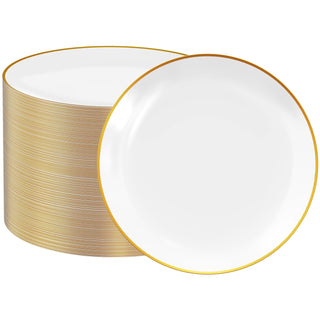
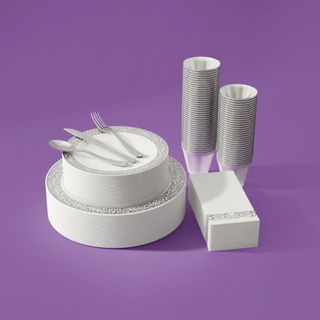
Choose a 10- or 10.25-inch plate when presentation space matters or when the menu includes a protein, starch, vegetable, salad, and garnish. For an elevated place setting, Jolly Chef's 7-inch and 10.25-inch white plates with gold rim pair a dessert/appetizer size with a dinner size. The currently eligible 10.25-inch HWC variant was in stock when this guide was updated; always recheck current availability before purchasing.
If guests will carry a plate while standing, choose the smallest size that safely holds the complete intended portion.
Match Plate Size to Service Style
| Service style | Recommended plate plan | Reason |
|---|---|---|
| Passed hors d'oeuvres | 5-6 inch plate, or no plate for true one-bite items | Easy to hold with a napkin and drink |
| Cocktail buffet | 7 inch plate | Supports several bites without encouraging entrée-size loading |
| Self-serve lunch buffet | 9 inch plate | Good balance of capacity and tray-free carrying |
| Wedding or plated dinner | 10-10.25 inch dinner plate plus optional 7 inch course plate | Creates space for presentation and separates courses |
| Family-style table | 9-10 inch guest plates plus 12+ inch serving platters | Keeps serving pieces separate from individual portions |
Paper or Plastic: Size Is Only Half the Decision
Paper plates are convenient for casual meals and fast cleanup, while rigid plastic plates can provide more support for heavier or sauced foods. Material names alone do not prove performance: depth, rim design, weight, and construction all affect how a plate carries food. Test one fully loaded place setting before committing to a large order.
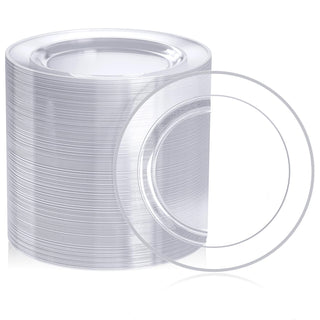
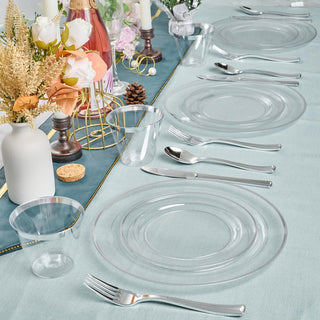
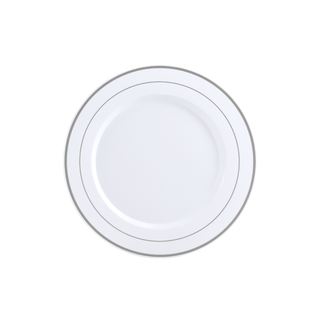
For transparent event service, 7-inch and 10-inch clear plates with silver rim provide separate small-course and dinner sizes. For a high-volume 10-inch option, the white 10-inch plates with silver rim had qualifying HWC inventory at the time of review.

A Five-Step Plate Test Before You Order
- Build the heaviest real menu plate. Include sauces, garnish, and any bread served on the same plate.
- Carry it 30-50 feet. Simulate the route from buffet to seat, including turns and one-handed moments.
- Check rim clearance. Food and sauce should not sit at the plate edge.
- Repeat with dessert or appetizers. Do not assume the dinner plate should serve every course.
- Calculate the total by service round. Use the event-specific quantities in our disposable tableware quantity guide, then add a documented contingency for breakage, seconds, and staff meals.
Planning boundary: Plate capacity varies by food density, rim depth, and how guests serve themselves. The sizes above are practical planning ranges, not a universal serving standard. Caterers should test the actual menu and comply with local food-service requirements.
Build the Rest of the Place Setting
Plate size affects more than the plate order. Larger dinner plates need more buffet width, table space, rack capacity, and waste-bin volume. Before purchase, compare the full plastic plate collection and confirm case quantity, dimensions, and in-stock variants. Businesses planning recurring or large events can also review Jolly Chef's business solutions.
FAQ
What is the standard paper plate size?
A standard full-meal paper plate is commonly 9 to 10 inches. A 9-inch plate suits many buffets, while a 10-inch plate gives more room for plated meals or multiple sides.
What size are dessert paper plates?
Dessert paper plates are usually 6 to 7 inches. Use 6 inches for cake or a tasting portion and 7 inches when dessert includes fruit, ice cream, or several small items.
What size paper plates are best for a party?
Use 9-inch plates for a general party meal and 6-7-inch plates for appetizers or dessert. If the meal has large or sauced foods, test a 10-inch plate.
Is a 10-inch plate too large for a buffet?
No, but it may encourage larger servings and require more space. Choose it when the menu genuinely needs the capacity, not simply because it looks more generous.
Can one plate size cover every course?
It can, but two sizes usually create a cleaner service plan. A 9-10-inch dinner plate plus a 6-7-inch appetizer/dessert plate reduces crowding and makes each station easier to manage.