


Thanksgiving Takeout Packaging Guide for Restaurants
Thanksgiving takeout is a production system disguised as a holiday meal. Restaurants must assemble several foods with different textures and temperature needs, then hand them to customers in a short pickup window. The best packaging plan begins with the menu, not a catalog: decide what must stay hot, what must stay cold, what must stay crisp, and what can safely share a container.

Thanksgiving Takeout Packaging by Food Type
| Menu item | Packaging approach | Why it works | Pre-service test |
|---|---|---|---|
| Sliced turkey or roast | Shallow lidded container; sauce packed separately | Limits crushing and prevents gravy from flooding other foods | Check portion fit and lid clearance |
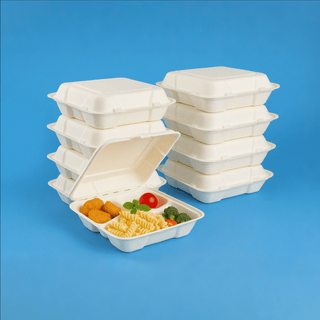
| Mashed potatoes, stuffing, macaroni | Dedicated lidded side container | Keeps dense sides from shifting into vegetables | Close while warm and inspect for lid distortion or leaks |
| Gravy and cranberry sauce | Small leak-resistant container placed upright | Separates liquids and makes serving easier | Invert a water-filled sample over a tray for 30 seconds |
| Roasted vegetables | Vented or briefly rested before sealing, when the approved packaging allows | Reduces trapped steam that softens texture | Compare immediate sealing with a controlled short rest |
| Rolls and crisp toppings | Dry paper tray or separate bag | Prevents moisture migration from hot sides | Hold for the expected pickup time and check texture |
| Cold salad or dessert | Separate cold container and cold staging zone | Avoids warming beside hot entrées | Verify the complete cold-chain route |
A Thanksgiving order should be grouped for pickup only after hot and cold components have been packed and staged in their correct temperature zones.
Choose Containers from the Menu Backward
Use lidded kraft containers for sauced sides and composed meals
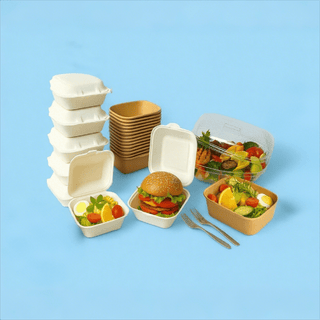
Round kraft food containers with clear lids can support salads, pasta, fries, or side dishes when the product dimensions and intended use match the menu. Jolly Chef's 19 oz and 25 oz kraft containers with clear lids had qualifying HWC inventory when this guide was prepared. Before service, verify the chosen variant's capacity, lid fit, temperature instructions, and current stock.
Keep dry or crisp foods away from condensation
Open kraft food trays are useful for rolls, fried garnishes, or foods intended for immediate service, but they are not a substitute for a secure lidded package during transport. The 2 lb bulk kraft paper food tray had an eligible HWC SKU in stock during review. Use it only where its open design fits the handoff and transport plan.
Offer tableware as a separate, counted bundle
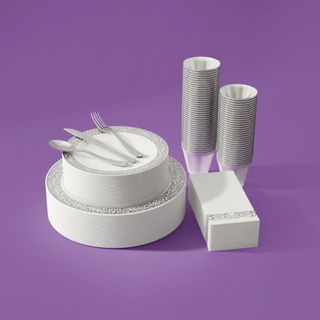
Do not bury forks, napkins, or plates under hot containers. Count them into a separate bundle by guest count and place that bundle on top at final handoff. For family meals that include place settings, a white and gold disposable dinnerware set can provide a coordinated option; its eligible HWC variants were in stock when checked.


A Six-Zone Thanksgiving Packing Workflow
- Order verification: Print or display the exact meal size, add-ons, allergens, customer name, and pickup window.
- Hot entrée and sides: Portion with standardized utensils and verify lids before the food leaves the hot line.
- Cold items: Add salads, cold desserts, and refrigerated sauces from a separate cold station.
- Dry goods: Add rolls, crisp garnishes, serving utensils, napkins, and counted tableware.
- Seal and label: Apply item labels, storage instructions, reheating directions approved by the kitchen, and the customer identifier.
- Pickup staging: Group the order by pickup window while maintaining the required hot or cold holding conditions.

The final checker should verify the order against the ticket without opening sealed food containers.
Food Safety Boundaries for Holiday Takeout
The FDA advises consumers to keep refrigerators at 40°F or below and to refrigerate or freeze perishables within two hours of cooking or purchase (one hour when outdoor temperature is above 90°F). Its Safe Food Handling page also emphasizes cleaning, separation, proper cooking, and prompt chilling.
Retail establishments must also follow applicable state and local rules. The FDA Food Code is a model, not a substitute for local requirements; it uses 135°F or above for hot holding and 41°F or below for cold holding in retail food settings. The FDA summarizes those thresholds in its retail food handling guidance.
Build a Packaging Test Before Thanksgiving Week
| Test | Method | Pass condition |
|---|---|---|
| Fit | Pack the full advertised portion with garnish | Lid closes without pressing into food |
| Leak | Use water or a low-risk test liquid; tilt in a lined tray | No liquid reaches the outer package |
| Stack | Stack the maximum handoff quantity for the expected hold time | No crushing, sliding, or lid release |
| Texture | Hold a complete meal for the expected pickup and drive time | Crisp foods remain acceptable and sauces stay separated |
| Label | Ask a staff member unfamiliar with the order to identify every item | Customer, item, storage, and reheating information are unambiguous |
| Handoff | Simulate the busiest 15-minute pickup window | Orders remain traceable and temperature controls are maintained |
Connect Packaging to Ordering and Service
Start with the food packaging collection, but purchase only after checking the specific product and variant. Restaurants planning higher-volume programs can review business solutions. For buffet service rather than customer pickup, use our fall catering buffet setup guide; it addresses guest flow and restocking rather than takeout assembly.
FAQ
What is the best packaging for Thanksgiving takeout?
The best system uses separate packages for hot, cold, crisp, and liquid foods. Choose each container only after testing portion fit, lid security, stacking, and the expected hold and transport time.
Should gravy be packed with the turkey?
Usually no. A separate sealed gravy container reduces leaks, prevents other foods from becoming soggy, and lets customers add the amount they prefer.
How do restaurants keep Thanksgiving takeout organized?
Use pickup windows, standardized station order, and one final ticket check. Keep hot and cold items in their proper holding zones until the order is grouped for handoff.
Can hot and cold foods go in the same bag?
They should be physically separated and kept under their required temperature controls. Follow local rules and your tested handoff process rather than assuming one bag is suitable.
When should a restaurant test Thanksgiving packaging?
Test before the menu and packaging order are finalized. Repeat the test whenever the portion, container variant, pickup window, or menu composition changes.
How much extra packaging should be ordered?
Base the quantity on confirmed meals, components per meal, staff meals, replacements, and a documented contingency. Do not use a universal percentage without reviewing case packs, historical defects, and the restaurant's own order pattern.