
Cold Drink Cups with Strawless Lids: Size & Fit Guide
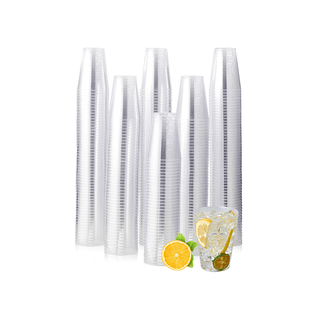
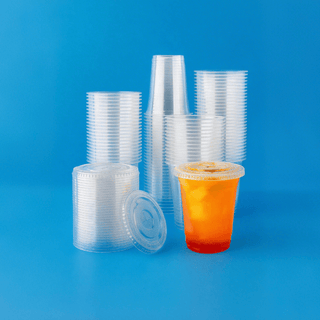
“Coffee cups with lids” often describes hot paper cups, while iced coffee, smoothies, and cold fruit drinks use a different cup-and-lid system. This guide focuses on clear PET cold cups and strawless sip lids so cafés, juice bars, caterers, and event teams can choose a size, verify the fit, and build a repeatable packing workflow.

Choose the beverage format before the cup size
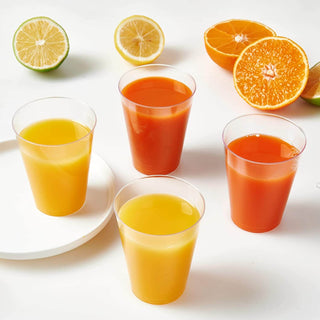
Drink format drives the cup decision. Iced coffee needs headspace for ice and cream; smoothies need enough opening and wall strength for a thick pour; fruit drinks need a lid that resists splashes during movement. Start with the drink, then select the capacity and lid profile.
| Drink use | What to check | Common failure |
|---|---|---|
| Iced coffee or tea | Ice displacement, fill line, condensation, sip opening | Overflow when the lid is pressed onto an overfilled cup |
| Smoothies or blended drinks | Viscosity, dome clearance, carry stability | Product touches the lid or blocks the sip opening |
| Fruit drinks or lemonade | Cold condensation and carrier fit | Drips collect on the outside and weaken the handoff |
| Event batch service | One lid family, staging speed, refill stock | Mixed rim sizes create a slow or unreliable packing line |
Judgment 1: The best cold cup is the one that leaves enough headspace for the real recipe and still seats its lid without force.
How 12, 16, 20, and 24 oz sizes change service
Use the stated capacity as a planning reference, not as a promise that the cup should be filled to the rim. Ice, fruit, foam, and blended texture all occupy volume. A smaller cup can speed handoff and control portion size; a larger cup can support a higher-volume drink but may need a stronger carrier.
| Size family | Useful starting scenario | Operational question |
|---|---|---|
| 12 oz | Short iced coffee, juice, tasting, or controlled event portion | Does the recipe still look full after ice and toppings? |
| 16 oz | Standard smoothie, iced tea, or café cold drink | Can the lid and carrier handle the added weight? |
| 20 oz | Large iced coffee or a premium smoothie serving | Will the fill line leave enough headspace for a secure seal? |
| 24 oz | High-volume cold drink or extended service window | Does the order need a larger carrier or a different lid stack? |
Judgment 2: Standardizing one or two sizes often improves speed more than offering every available capacity.
Verify rim and lid compatibility
A compatible lid should seat evenly around the rim, stay secure when the cup is lifted, and leave the sip opening aligned with the drink. Compare the manufacturer’s dimensions and then run a physical test. The plastic cups and lids collection is the right starting point for comparing formats, while the 98 mm strawless lid product page provides the lid reference for 12–20 oz formats.
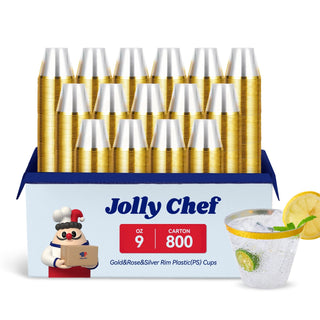
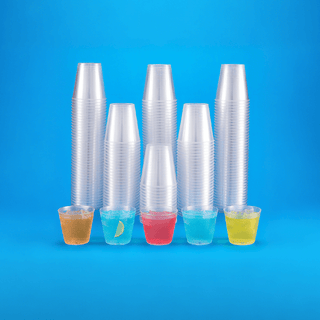
For 24 oz service, verify the exact product pairing rather than assuming that a 98 mm lid fits every larger cup. Jolly Chef’s multi-size PET cup set is a useful product reference because its variants and lid configuration are shown together.
Judgment 3: A lid that fits an empty cup can still fail after ice, foam, or a carrier changes the pressure on the rim.
Run a five-step cup-and-lid test

Record liquid volume, ice amount, toppings, and the intended fill line. Do not use the nominal ounce size as the recipe.
Use the exact cup and lid pair. Seat the lid from one side, then check the entire circumference for gaps or lifted edges.
Lift the filled cup, place it in the real carrier, and walk the longest expected route. Look for sliding, drips, and lid movement.
Wait through the expected service interval. Check condensation, pressure, foam, and whether the sip opening remains usable.
Record the cup SKU, lid SKU, fill line, carrier, and cleaning or storage instruction so every shift repeats the same setup.
For related hot beverage decisions, the coffee cup size guide covers paper cup sizing. The business solutions page is the appropriate route for recurring café or event requirements.
Related products for a cold-drink test

These Active overseas-warehouse products had positive-inventory variants with hwc SKU markers at publication time: multi-size PET cups with strawless lids, a compatible 98 mm lid carton, and a second multi-size PET cup set. Confirm the live variant and available count before ordering.
Food-contact and temperature boundaries
This guide does not certify a product for hot liquids, ovens, microwaves, or any use outside the product instructions. Follow the supplier’s intended-use information and the FDA consumer overview of food packaging and food-contact substances. Product images show a service scenario; they are not a substitute for the current specification, variant, or inventory page.
Make the cold-drink line repeatable
Once a cup and lid pair passes the physical test, document the pairing at the station. Keep the cup cartons and lid cartons together, mark the tested fill line on the prep sheet, and give staff one approved combination for each menu size. A single approved system reduces the chance that a busy shift will press a mismatched lid onto a cup because both packages look similar.
Carrier choice is part of the fit test. A lid that stays secure on a counter can shift when a drink is placed in a four-cup carrier or handed across a pickup shelf. Test the fullest realistic order, including ice, toppings, condensation, and the longest walk. If a drink moves to delivery, repeat the test with the same bag, carrier, and hold time used by the driver.
For recurring orders, save the product handles, variant sizes, lid family, tested fill line, and the date of the last fit check. Recheck after a packaging change or a new drink recipe. This record is more useful than relying on an ounce label or a stock photograph.
Frequently asked questions
Do all 12 oz cups use the same lid?
No. Rim diameter, wall shape, and lid profile vary. Confirm the manufacturer’s pairing and test the exact cup and lid together.
Are strawless lids better than straw lids?
They can simplify service and reduce loose components for drinks intended to be sipped directly. The better choice depends on drink texture, guest preference, and the carry route.
How full should a cold drink cup be?
Use the recipe’s tested fill line and leave enough headspace for ice, foam, toppings, and a lid that seats evenly. Maximum capacity is not a recommended fill level.
Can a 24 oz cup use the same lid as a 12 oz cup?
Only when the exact product specification confirms the same rim and lid system. Never infer compatibility from the ounce label alone.
How do I prevent condensation in a carrier?
Test the filled cup in the actual carrier, use the intended lid, and check the route and hold time. Condensation depends on drink temperature, humidity, ice, and the carrier surface.
What should I record for repeat orders?
Record the cup SKU, lid SKU, size, tested fill line, carrier, and the service conditions that passed the test.