

Disposable Cutlery for Catering: Quantity & Service Guide
“Disposable cutlery” is a purchasing category, not a quantity plan. A pasta buffet, a steak dinner, and a dessert-only station consume different utensil mixes. This guide gives caterers, restaurants, offices, and event teams a repeatable way to forecast, pack, stage, and replenish food-service utensils.

Start with the menu and service style
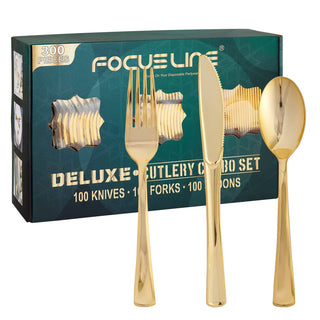
Menu first, pack count second. List every item that requires a utensil and decide whether guests will sit, circulate, or return for seconds. Use the disposable cutlery collection to compare available formats, then record the exact product and case pack on the event sheet.
| Service format | Typical first-pass setting | Extra check before ordering |
|---|---|---|
| Plated dinner | Fork and knife; spoon only when the menu needs one | Course changes, dropped utensils, and staff replacement path |
| Buffet or family-style meal | Fork plus the utensil required by the main dish | Seconds, queue length, and whether guests carry food and cutlery together |
| Food truck or concession | Utensil matched to the handheld or tray item | Wind, condiment handling, trash access, and one-handed use |
| Dessert or tasting station | Spoon, fork, or both according to texture | Small portions can increase repeat visits and utensil turnover |
Judgment 1: The correct fork-to-spoon ratio comes from the menu, not from a universal “one of each” rule.
A practical quantity worksheet
Use this sequence for every event:
- Write the guest count and the number of service windows.
- Mark which menu items need a fork, spoon, knife, or no utensil.
- Count the first-pass setting for each item.
- Add a documented operating buffer for seconds, spills, and late arrivals.
- Round up to the product’s actual box or carton pack.
Planning boundary: The buffer is an operating assumption, not a measured industry percentage. Record why you chose it—long event, outdoor wind, children serving themselves, multiple courses, or limited refill access—so the next event can be adjusted using real consumption.
| Item | Count from | Check before final order |
|---|---|---|
| Forks | Entrées, salads, cakes, and foods guests cannot comfortably pick up | Do guests need a second fork for a second plate or a separate dessert course? |
| Spoons | Soups, sauces, desserts, coffee, and soft foods | Are spoons staged at the drink or dessert zone instead of every place setting? |
| Knives | Steak, plated entrées, firm pastries, or spreadable items | Does the menu actually require a cutting edge, or is a fork enough? |
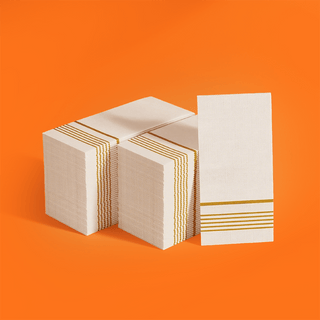
| Napkins | One for the first pass plus the service team’s spill and refill needs | Match ply, size, and carton pack to the food and cleanup plan. |
Judgment 2: Rounding after the worksheet avoids both under-ordering and the false precision of a guest-count-only estimate.
Choose bundled or loose utensils
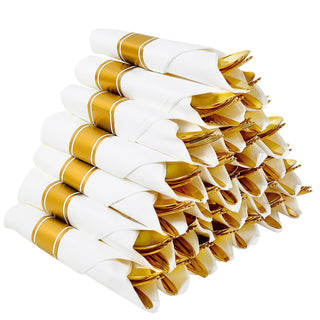
Pre-rolled silverware is useful when staff must hand a complete setting across a counter or when wind makes loose pieces difficult to control. Loose forks, spoons, and knives give a buffet more flexibility and can reduce unused pieces when the menu is uneven. The best format depends on the handoff, not on appearance.
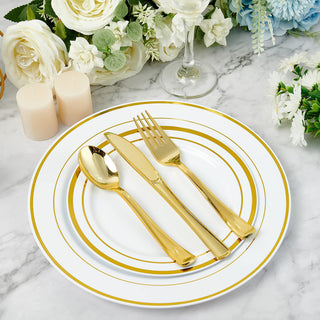
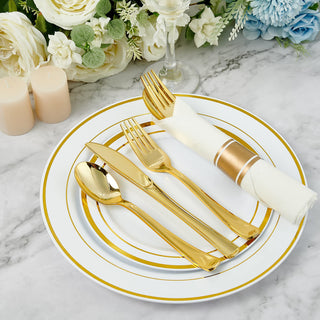
Jolly Chef’s pre-rolled gold plastic silverware is a practical reference for bundled service. For separate pieces, compare the gold fork and cutlery assortment and pair only the utensils the menu needs.
Judgment 3: Bundles improve handoff speed; loose pieces improve menu-specific control.
Pack and stage the service line

Separate the first-pass load from the refill carton so the team can see what remains.
Keep forks, spoons, knives, napkins, and pre-rolled sets in distinct bins. Use a simple printed count sheet rather than memory.
Keep unopened cartons and backup bundles behind the line, away from used utensils and waste.
Assign one person to replenish during the peak window so guests do not reach into reserve stock.
Run one mock guest flow. Remove any step that makes people cross the food line or search for a missing utensil.
At close, note unopened packs, loose leftovers, and the items that ran short. Use that record for the next quote.
For larger recurring programs, the Jolly Chef business solutions page is the appropriate next step for discussing pack sizes and operating requirements. The related catering cleanup guide covers how staging affects labor after service.
Related products for a test setup

The following Active products had positive-inventory variants with hwc SKU markers at the time of this run: pre-rolled gold silverware, gold cutlery pieces, and bulk white napkins. Confirm live inventory before placing a new order.
Food-contact and cleanup boundaries
Do not infer heat resistance, reuse suitability, or food-contact certification from a utensil’s color or stiffness. Use the supplier’s product instructions and the intended food type. The FDA consumer overview of food packaging and food-contact substances explains why intended conditions of use matter. Follow local waste, recycling, and venue requirements for disposal.
Adapt the pack to common catering menus
For a plated steak or entrée, keep the knife count tied to the number of plates that actually need cutting. A pasta or salad buffet may use many more forks than knives, while a soup and dessert service may shift demand toward spoons. A food truck can often reduce loose pieces by offering one utensil that works for the core menu and placing extra spoons only at the condiment or dessert point.
When multiple courses share one guest route, stage the first-pass setting at the entry and place course-specific utensils beside the relevant food. That arrangement avoids handing every guest a full bundle that will remain unused. If the event has children, outdoor wind, or a long queue, test whether pre-rolled bundles are easier to carry and replenish than open bins.
Keep the event sheet with the final case-pack math. The next order should start from observed unopened packs and shortages, then adjust the buffer for the same venue and menu. This makes the guide a working procurement record instead of a one-time estimate.
Frequently asked questions
How many disposable cutlery sets do I need per guest?
Start with the actual first-pass setting for the menu, then add a documented operating buffer for seconds, spills, and service conditions. Round up to the product’s case pack.
Should a buffet offer every utensil to every guest?
No. Stage the utensil that matches each menu zone when that reduces waste and keeps the line easy to understand.
Are pre-rolled utensils better for catering?
They can speed handoff and keep a complete setting together. Loose pieces are more flexible when menus use different utensil mixes.
How many napkins should I order with disposable cutlery?
Count napkins separately from utensils and base the number on food mess, event length, beverage service, and the refill plan.
What should I do with unused open utensils?
Keep clean, unused pieces separated from the service line and follow the venue’s hygiene and storage policy before deciding whether they can be retained.