


How to Choose Disposable Bathroom Napkins for Commercial Use
Last updated: March 3rd, 2026
A guest washes their hands, pulls a napkin, and reaches for another because the first one tears. No complaint — but the experience is remembered. In restaurants, offices, hotels, and event venues, disposable bathroom napkins are used constantly and noticed silently. Chosen by price alone, many paper napkins for bathroom use end up consuming faster and costing more. So the real question is: Should disposable bathroom napkins be selected by unit price — or by how they perform in real use?
Key Takeaways
-
Low-cost paper napkins often result in higher total consumption
-
Absorbency and wet strength matter more than price per pack
-
Guest bathroom napkins and staff areas should use different configurations
-
Consistent quality improves both cost control and brand perception
-
Disposable bathroom napkins should be managed as a usage strategy, not a commodity
Understanding Key Performance Dimensions of Bathroom Napkins
The CDC states that inadequate hand drying can increase bacterial transfer after washing. Since hand drying is critical for hygiene, not all paper napkins perform equally in commercial restrooms. The following performance dimensions directly affect usage rate, waste, and user experience.
Key Performance Comparison
|
Napkin Type / Performance |
Ply Count |
Sheet Size |
Absorbency |
Wet Strength |
Tactile Feel |
|
Basic Paper Napkins |
1–2 ply, thin |
Small |
Low, slow |
Weak, tears easily |
Rough, basic |
|
Standard Commercial Napkins |
2 ply |
Medium |
Moderate |
Stable |
Neutral, functional |
|
Guest Bathroom Napkins (Premium) |
3 ply, reinforced |
Medium–Large |
High, fast |
Strong |
Soft, premium feel |
Tips:The "10-Second Field Test" for Procurement
Before buying, use these two "BS detectors" to verify the specs:
-
The 3-Second Drip: Drop water on the sheet. If it beads up instead of soaking in within 3 seconds, users will need multiple sheets just to break the surface tension.
-
The Wet-Tug: Soak the center and pull. If it shreds instantly, it will leave "paper lint" on guests' hands, forcing them to pull more to clean up the mess.
In real-world commercial environments, these dimensions rarely act independently.
For example, a paper napkin with sufficient ply but low absorbency often still requires multiple sheets per use. Likewise, a napkin that absorbs well but lacks wet strength may tear during hand drying, forcing users to pull again.
Statista data confirms that low-performance napkins can increase usage by 30–40% in busy environments. This is why experienced buyers often see a 25% drop in monthly consumption simply by switching from a basic 1-ply to a high-absorbency 2-ply or 3-ply system.
By focusing on "one-sheet performance" rather than just the lowest price per case, procurement officers ensure their disposable bathroom napkins reduce both the volume of trash generated and the labor costs required for constant refilling.
The 3 Most Common Purchasing Mistakes
1. Focusing Only on Unit Price
Unit price is easy to compare, but it rarely reflects real usage cost.
Thin or low-quality paper napkins often lead to:
-
Multiple pulls per hand-dry
-
Faster depletion during peak hours
-
Increased labor time for refilling dispensers
Over weeks and months, these factors quietly raise operational expenses — even though the product appears "cheaper" on paper.
2. Using One Napkin for Every Bathroom
Commercial bathrooms serve different purposes.
-
Guest bathroom napkins influence perception and comfort
-
Staff and back-of-house areas are primarily functional

Using one napkin type across all spaces often results in:
-
Overpaying for internal areas
-
Underperforming in guest-facing restrooms
A one-size-fits-all approach rarely delivers optimal cost or experience.
3. Ignoring Quality Consistency
Inconsistent paper quality between batches creates subtle but real problems:
-
Guests notice changes in texture and strength
-
Employees adapt by using more paper
-
Brand standards become harder to maintain
For multi-location businesses, consistency is not optional — it is essential for both cost control and professionalism.
Core Purchasing Metrics for Buyers
When selecting paper napkins for bathroom use, commercial buyers should prioritize the following five metrics.
1. Absorption Efficiency
Absorption efficiency determines whether one sheet is enough.
High-efficiency paper napkins reduce total consumption by encouraging single-sheet usage — especially during peak traffic periods when users are less patient.
2. Wet Strength
Wet strength affects how paper performs on wet hands.
Napkins that tear easily increase waste and frustration, particularly in high-volume restrooms. Strong wet strength ensures stability and predictable usage.
3. Ply & Structure (Not Just Thickness)
More layers do not automatically mean better performance.
-
2-ply classic napkin: Efficient and cost-sensitive
-
3-ply premium napkin: Enhanced comfort and fewer pulls

The best choice depends on where the napkin is used.
4. Packaging & Refill Efficiency
Commercial-size packaging:
-
Reduces refill frequency
-
Lowers labor costs
-
Improves supply predictability
This factor is often overlooked but has a direct operational impact.
5. Customization & Differentiation
Custom bathroom napkins are increasingly used in hotels, event venues, and branded spaces.

Beyond aesthetics, customization helps:
-
Maintain consistent quality across locations
-
Reinforce brand identity
-
Avoid mixing different paper standards in one environment
Disposable bathroom napkins are no longer just consumables — they are part of the overall space experience.
Scenario-Based Selection Guide
Traffic volume, user expectations, and refill frequency vary significantly between public restrooms, guest-facing areas, and staff washrooms. Configuring napkins by scenario helps control cost while maintaining consistent hygiene standards.
Bathroom Napkin Selection by Commercial Scenario
|
Usage Scenario |
Selection Logic |
Recommended Type |
Why (Rationale) |
|
High-traffic public restrooms |
High absorbency, wet strength |
Superior wet strength; won't shred when wet. |
|
|
Guest-facing bathrooms |
Premium feel, soft touch |
3-ply white napkins |
High GSM/Plushness; delivers a luxury hand-feel. |
|
Staff / back-of-house areas |
Cost control, basic utility |
2-ply white napkins |
Cost-efficient; balances hygiene and budget. |

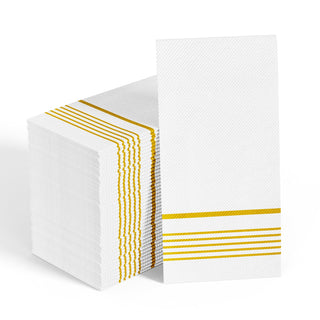
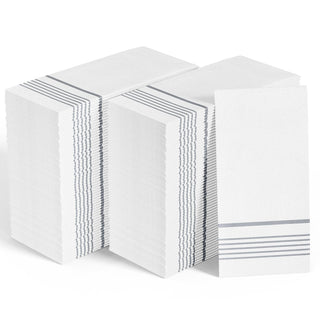
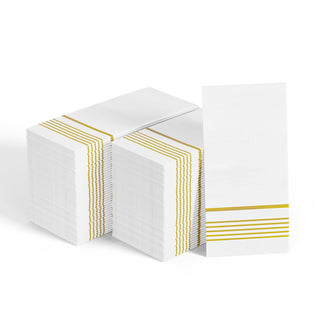
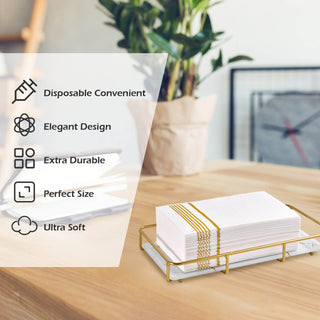
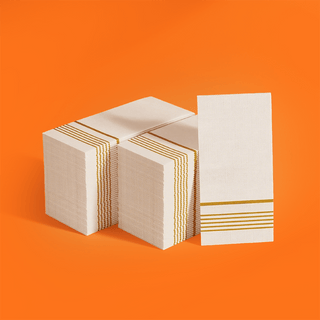
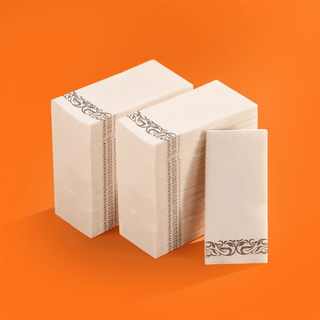
Textured, linen-feel disposable hand towels balance absorbency and durability, reducing over-pulling in busy environments.
In hotels, events, and brand spaces, thicker and softer guest bathroom napkins improve perceived cleanliness and comfort while reducing repeat pulls.
OSHA sanitation standards require adequate hand-drying materials in workplace restrooms.
For internal use, efficient 2-ply paper napkins deliver reliable performance without unnecessary cost.
FAQ
Q1: Are thicker paper napkins always better for bathrooms?
No. For commercial use, napkins with high absorbency and strong wet strength reduce waste and repeat pulls, which matters more than thickness alone.
Q2: Why do disposable bathroom napkins run out so quickly?
Low-quality napkins or insufficient absorbency force users to pull multiple sheets per hand-dry, increasing overall consumption and refill frequency.
Q3: Should guest bathrooms and staff bathrooms use different napkins?
Yes. Guest-facing restrooms benefit from softer, stronger napkins to enhance experience, while staff or back-of-house areas can use cost-efficient options without compromising hygiene.
Q4: Do customers really notice bathroom napkin quality?
Yes. In commercial spaces, napkin quality influences perceived cleanliness and professionalism, impacting overall guest satisfaction and brand image.
Q5: What should commercial buyers consider when purchasing bathroom napkins in bulk?
Look for suppliers offering bulk pricing, reliable quality, and optional customization. This helps control costs, maintain consistent performance, and align napkins with your brand or facility standards.
Disposable bathroom napkins are high-use items where hidden costs add up quickly. Smart operators focus on real-world performance: choosing the right napkin, matching it to each scenario, and ensuring consistent quality. In commercial spaces, it's not just about buying paper — it's about balancing efficiency and guest experience.
From busy public restrooms to premium guest spaces, Jolly Chef turns paper purchasing into smart, usage-based planning. Ready to find the right solution for your commercial space? Contact us today to request a quote or discuss your needs.