
Are Paper Cups Microwave Safe? Risks and Tips for Commercial Use
Last updated: January 27, 2026
In bustling cafés and commercial kitchens, customers often ask to reheat a cooled-down drink. While paper cups are perfect for serving hot beverages, microwaving them introduces a complex set of risks. This article explores the realities of microwaving paper cups in commercial scenarios, helping you set practical limits and choose the right inventory for safer daily service.
Key Takeaways
-
Paper cups are not typically designed for microwave reheating in commercial use
-
Reheating drinks in paper cups is a controllable operational risk
-
Clear usage guidelines help reduce complaints and liability
-
Invest in high-insulation cups to negate the need for reheating.
-
Choosing compliant, well-insulated cups supports safer and smoother daily operations
1. Microwave Safety for Paper Cups Is a Business Risk
In a commercial setting, “Can you microwave paper cups?” quickly becomes an operational risk issue rather than a consumer curiosity.
Uncontrollable variables in real kitchens
Unlike home use, commercial microwave heating involves factors that are hard to standardize:
-
Heating time: often rushed or inconsistent
-
Microwave power levels: vary widely between units
-
Type of liquid: some liquids carry higher risk when microwaved, such as milk (can boil over quickly), sugary drinks (may superheat), oils or cream-based beverages (can reach hot spots), or carbonated drinks
Potential risks of microwave reheating in paper cups
-
Material softening or deformation
-
Liquid leakage or sudden collapse
-
Direct consequences: customer complaints, refunds, injury claims, and brand reputation damage
Because of these risks, most commercial paper cups are designed for direct hot beverage service—not microwave reheating.
2. Understanding Paper Cup Design Limits in Microwave Scenarios
Clarifying a common misconception
A paper cup without a microwave safe symbol does not mean it is unsafe or non-compliant.
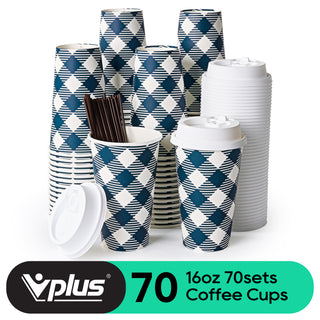
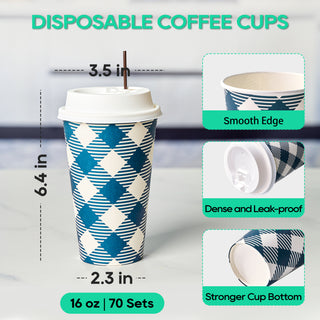
Most disposable cups, such as paper coffee cups, are designed to hold hot drinks directly at the point of service, sometimes with coffee cup sleeves for insulation.
Common Paper Cup Materials
Paper cups typically use standard, recycled, or kraft paper for structure. Performance depends largely on inner coatings.
Inner Coating Comparison
|
Coating Type |
Heat Resistance |
Practical Considerations |
|
PE (Polyethylene) |
Up to 212°F (100°C) |
Stable for short-term heat exposure |
|
PLA (Polylactic Acid, compostable) |
Up to 185°F (85°C) |
Can soften if overheated |
|
Silicone/wax-like coatings |
Up to 180°F (82°C) |
Risk of softening or migration under high heat |
|
No coating (bare paper) |
Limited, depends on wall structure |
High leakage and failure risk |
3. Standard Operating Procedures for Reheating
Even though paper cups aren’t made for microwave use, brief reheating sometimes happens in real operations. When it does, clear limits matter.
Before heating
-
Use cups with recognized food-contact compliance: FSC Certified, PFAS-Free, BPA-Free, FDA Compliant, which you can usually find in technical specs
-
Avoid heating beyond the cup's intended temperature limit
-
Remove plastic lids, straws, and accessories
During and after heating
-
Keep reheating short and controlled
-
Avoid high-power or extended cycles

Still, the safest approach is not better reheating but less reheating overall.
4. A Smarter Approach: Keep Drinks Hot From the Start
Instead of managing microwave safe risk downstream, many operators improve safety and efficiency by minimizing reheating demand altogether.
How to reduce reheating needs
-
Choose insulated paper cups with better heat retention
|
Cup Type |
Heat Retention |
Notes |
|
Single-layer paper cup |
Moderate |
Often requires sleeves |
|
Double-layer paper cup |
Good |
Better insulation and stability |
|
Excellent |
Best for high-volume service and heat retention |

[[related_products_3]]
Benefits for operators
-
Fewer customer complaints about temperature
-
Simpler staff workflows
-
Lower exposure to safety and liability risks
Instead of relying on microwaves as a fix, this approach aligns cup design with real service conditions.
FAQ
Q1: Our paper cups don’t have microwave-safe label, could that cause compliance issues or customer complaints?
No. Lack of a microwave-safe label does not mean non-compliance. Commercial paper cups are designed for direct hot beverage service, not reheating. As long as the cups meet food-contact standards such as FDA compliance, FSC certification, PFAS-free and BPA-free requirements, they are suitable for professional foodservice use.
Q2: If a customer insists on microwaving their drink, how can we reduce liability?
The key is clear communication and standardized guidance.
Operators can provide simple instructions such as
-
Remove plastic lids and straws
-
Limit heating to short intervals (e.g., under 15 seconds at ≤700W)
-
Add a cup sleeve after heating to prevent burns
Clear notices and staff training help meet customer requests while establishing responsibility boundaries.
Q3: Are three-layer insulated paper cups safer than single-wall cups in heating scenarios?
They are safer to handle, not to microwave. Ripple and triple-wall cups improve insulation and stability, reducing burn risk after brief reheating—but they are still not designed for regular microwave use.
Q4: What if cup sleeves or lids don’t fit the paper cups?
Always confirm cup diameter and rim size before sourcing accessories. To simplify procurement and avoid mismatches, many operators choose paper cup sets, which improve workflow consistency and reduce return or replacement costs.
Q5: We operate multiple locations in different cities. Can supply and delivery stay consistent?
Yes. With a responsive global manufacturing system and multi-location warehousing, stable supply across regions is achievable. Flexible bulk purchasing and subscription options also help chains manage inventory more efficiently while controlling procurement costs.
Microwave safety is a common concern—but in commercial foodservice, clear usage boundaries and proper insulation design matter far more than microwave labels alone. Jolly Chef’s cups, sleeves, and lids make serving hot drinks safer and easier.
Want to explore bulk or subscription options? Contact us about bulk or subscription options to streamline your inventory. From takeaway coffee to high-volume cafés and food trucks, service is faster and safer.