


How to Safely Heat Paper Plates: A Commercial Guide for Busy Owners
In high-volume food trucks and pop-ups, microwaves are essential for bridging the gap between prep and service. However, your speed is only as good as your service ware.
While the question "Are paper plates microwave safe?" is common, the real issue for professionals is performance. Standard plates often fail under heat, risking your brand's reputation. Switching to commercial microwave-safe paper plates isn't just a safety choice—it’s a strategic move to protect your bottom line and ensure every dish holds its integrity from window to table.
Key Takeaways
- Operational Efficiency: Utilizing high-quality microwave-safe paper plates enables a seamless "pre-to-serve" workflow, reducing ticket times without dishwashing logistics.
- Risk Management: Standard paper plates can be a liability. Understanding "moisture traps" and combustion risks is vital for preventing fires in 1200W+ commercial microwaves.
- Pro Techniques: Implementing the "Ring Formation" and "Interval Pulse" heating methods prevents soggy bottoms and charred edges.
- Material Matters: Switching to certified heavy duty paper plates (like sugarcane bagasse) ensures structural integrity and chemical safety under heat.
How Do You Safely Heat Paper Plates Like a Pro?
The primary challenge for any pop-up kitchen is space. With limited burners and prep surfaces, the ability to pre-portion sides or complex grains and flash-heat them to order is a survival tactic.
In this "pre-to-serve" workflow, paper plates become an essential piece of cooking equipment, not just a vessel. They stop being just a vessel and become part of your cooking line. When a long line forms, utilizing high-quality options allows your staff to transition food from the prep station to the window seamlessly. This significantly reduces ticket times without the logistical nightmare of traditional dishwashing or transferring food between containers.
However, commercial-grade microwaves (1200W–2100W) deliver energy far more aggressively than household models. This intensity requires bulk disposable plates for catering that are specifically engineered to withstand thermal shock.
Hidden Liabilities: Why Standard Plates Fail
For a business owner, a "simple" paper plate can become a significant liability if it isn't engineered for heat. In a professional setting, we look beyond basic functionality to address three critical failure points:
1. Combustion and The "Moisture Trap"
Paper is hygroscopic. If stored in a humid food truck environment, standard fibers absorb ambient moisture. In a high-wattage microwave, these "wet spots" superheat rapidly, leading to localized charring. Furthermore, many retail-grade plates use hidden synthetic coatings or ink dyes that can spark or ignite, leading to kitchen downtime.
2. Chemical Migration (The PFAS Factor)
To achieve cheap grease resistance, some manufacturers rely on PFAS. When subjected to heat, these chemicals can migrate into the meal. This poses a serious threat to food safety compliance. Regulatory bodies like the FDA and USDA emphasize the importance of using microwave-safe materials to prevent chemical leaching.
3. Structural Failure: The "Soggy Bottom"
Nothing ruins a premium street-food experience faster than a plate that collapses. Standard plates coated with PE/PP (plastic) films trap steam between the food and the plate surface, creating a "sauna effect". This compromises the structural integrity, leading to messy leaks. You need soak-proof plates for hot food that allow the material to "breathe" while holding heavy sauces.
Professional Standards: Protocols for High-Volume Heating
To maximize the life of your disposables while ensuring a safe kitchen, implement these commercial-grade heating standards derived from professional SOPs:
I. The "Ring Formation" Method
Commercial microwaves often have "dead zones" in the center. Instruct staff to arrange food items (like sliders, wings, or dim sum) in a circle around the plate's perimeter, leaving the center empty. This utilizes the natural conductive properties of materials like heavy duty paper plates to pull heat inward, preventing charred edges.
II. The "Interval Pulse" (30+30 Rule)
Avoid continuous high-power cycles. For a 60-second heat time, use two 30-second bursts. This allows for "thermal equalization," letting the plate fibers release excess steam so the base doesn't become mushy.
III. Zero "Dry Runs"
Never cycle the microwave with an empty plate to "pre-heat" it. Without food to absorb the energy, paper fibers reach their ignition point in seconds.
While these professional protocols significantly mitigate risk, even the most rigorous "Interval Pulse" method cannot compensate for an inferior substrate. In a high-volume environment, your operational success isn't just about how you heat—it’s about what you heat. This is where material science meets culinary demand, moving beyond basic wood pulp to more resilient, engineered fibers.
The Solution: Why Material Science is the Answer
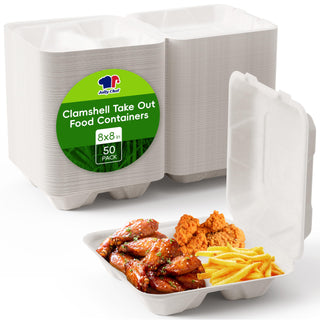
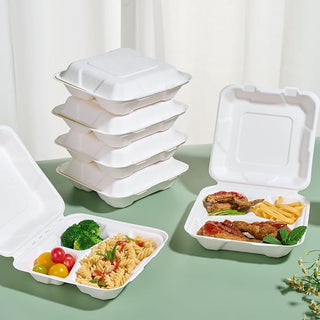
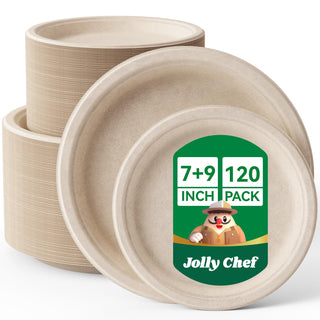
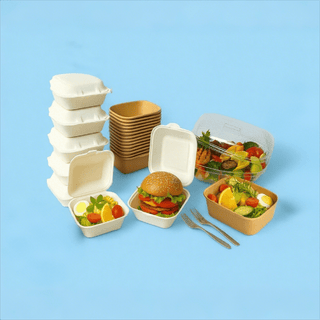
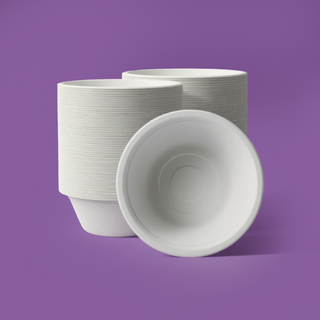
For operators who refuse to compromise on quality, Jolly Chef’s Sugarcane Bagasse Plates provide a superior alternative to traditional paper.
Engineered from reclaimed sugarcane fiber, these plates are built for the rigors of the modern food truck:
- Commercial Durability: Our bagasse series is naturally heat-resistant and soak-proof. Rated for up to 212°F (100°C), it outperforms standard paper products which often soften at 180°F (82°C). This ensures the containers maintain their rigid shape even under the weight of heavy, sauce-rich cuisines or oily fast-food favorites.
- Unmatched Certifications: With FDA 21 CFR 177.2600 and EN 13432 compliance, you are guaranteed a product that is non-toxic and environmentally responsible.
- Visual Appeal: The clean, textured finish of bagasse provides a rustic yet professional backdrop that enhances the perceived value of your food.
Whether you need Compartment Plates for combo meals or standard rounds, our Compostable Tableware Collection is designed to support your "pre-to-serve" workflow.

FAQ
Q: Why shouldn’t I use standard supermarket paper plates for reheating? A: Most retail-grade plates are designed for cold service or immediate use. They lack the high-heat resistance required for commercial reheating, which can lead to melting coatings, "arcing" (sparking) from hidden dyes, or chemical odors that taint the food. Q: Can I heat greasy foods like tacos or burgers on these plates? A: Yes, but caution is needed. Oil heats significantly faster than water and can exceed 200°C (390°F), which melts standard paper. Jolly Chef Bagasse plates are naturally more oil-resistant. For extremely high-fat items, we recommend spreading the food evenly or using a greaseproof liner as a thermal buffer. Q: Is it safe for my staff to handle the plates immediately after microwaving? A: While our heavy-duty design minimizes heat transfer, Bagasse holds "carry-over heat" to keep food warm. We recommend removing the plate when the food reaches 158°F (70°C) and always checking the base before handing it to a customer. Q: How do I know if a plate is free from harmful chemicals like PFAS? A: Always look for clear certifications. "Grease resistant" does not always mean safe. Trusted brands will display compostability certifications (like BPI or EN 13432) and FDA compliance, ensuring the plate doesn't leach "forever chemicals" when heated. Further safety guidelines can be found via the USDA. Q: Can I reheat a plate more than once? A: No. You should enforce a "Single-Cycle Policy". The first heating pass leaves paper fibers brittle and dry. Re-heating a plate that has already been microwaved significantly increases the risk of fire as the moisture content is already depleted.Conclusion
In the world of mobile foodservice, every detail of your packaging is a silent ambassador for your brand. Choosing microwave safe paper plates that stand up to the heat is an investment in your operational consistency.
By prioritizing certified, heavy-duty materials, you ensure that your customers remember the flavor of your food, not a failure of the plate.