

How Many Jello Shots Do You Need? B2B Batch Planning Guide
When a catering team asks, “How many jello shots do we need?”, the useful answer is a production plan rather than a universal number per guest. Attendance, service style, event duration, other beverage options, recipe yield, and the fill line all change the result. This guide gives bars, caterers, venue teams, and event operators a repeatable way to turn a recipe into a purchasing and prep count.
The most reliable jello shot count starts with measured finished volume. A container labeled 2 oz may be intentionally filled below the rim for transport, lids, garnish, or service speed. Measure the fill your team will actually use before multiplying the order.
Use this jello shot quantity formula
Prep target = base servings + your documented operational buffer
For a simple math example, four cups of finished mixture equals 32 fluid ounces. At a 1 oz fill, that is 32 portions; at a 1.5 oz fill, it is about 21 full portions; at a 2 oz fill, it is 16 portions. These are volume calculations, not a promise of yield from a particular gelatin package or recipe. Follow the recipe and package directions, then measure the actual finished volume.
| Finished batch volume | 1 oz actual fill | 1.5 oz actual fill | 2 oz actual fill | B2B planning use |
|---|---|---|---|---|
| 32 fl oz | 32 portions | 21 full portions | 16 portions | Small tasting station or pilot batch |
| 64 fl oz | 64 portions | 42 full portions | 32 portions | One controlled production run |
| 128 fl oz | 128 portions | 85 full portions | 64 portions | Multi-tray catering or bar prep |
Data boundary: The table is straight volume arithmetic. It does not estimate consumption, intoxication, recipe strength, cooling loss, or a safe number of alcoholic servings for an individual.
Choose the service format before ordering
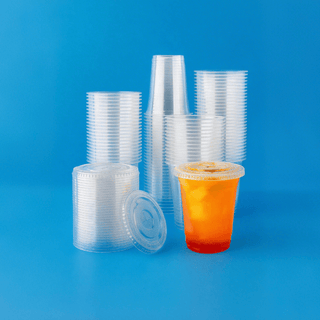
The same finished volume creates different operational needs depending on the vessel. Browse the Jello Shot Cups collection only after the team has agreed on portion control, transport, and service speed.
| Format | Best fit | Operational advantage | Planning check |
|---|---|---|---|
| Clear open shot cup | Controlled tray pass or staffed bar | Fast filling and visual count | Set one fill line and protect trays during transport |
| Lidded portion cup | Off-site catering and refrigerated staging | Lids support stacking and separation | Confirm lid fit and account for closing labor |
| Shot syringe | Themed adult events with staff oversight | Marked body supports a consistent fill | Keep it clearly separate from medical supplies and follow venue rules |

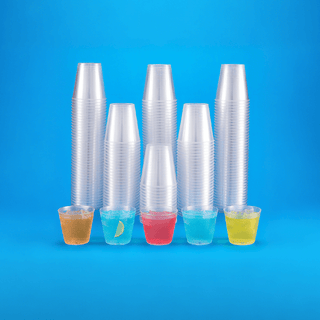
For bulk prep, compare 1 oz and 2 oz clear shot cups, lidded jello shot cups, and 1.5 oz and 2 oz shot syringes. The best format is the one your team can fill, chill, transport, count, and serve consistently.

A five-step production workflow for caterers
- Lock the event assumptions. Record adult attendance, event duration, service window, other beverages, nonalcoholic alternatives, venue restrictions, and who controls service.
- Run one measured test batch. Follow the recipe or mix instructions, measure finished liquid volume, and test the real fill line in the selected vessel.
- Convert volume to portions. Use the formula above, round down to full portions, and document any buffer separately so the purchasing team can see the assumption.
- Build trays in countable rows. Use consistent rows or rack positions so prep staff, transport staff, and bar staff can verify quantities without recounting loose pieces.
- Label and separate service. Keep alcoholic and zero-proof batches visually distinct, restrict adult alcoholic service as required, and maintain a sober transport plan for guests.
A counted tray is a better control unit than a loose case. It gives production, transport, and service teams the same inventory language. Jolly Chef's Business Solutions page can support teams comparing bulk formats, while the Jello Shot Syringes page shows a dedicated service option for themed bar programs.
Track alcohol by recipe, not by cup count
A 2 oz cup is not automatically one standard drink. Alcohol content depends on the amount and strength of spirits in the entire batch, then on how that batch is divided. The U.S. National Institute on Alcohol Abuse and Alcoholism defines a standard drink as containing 0.6 fluid ounces of pure alcohol; one example is 1.5 fluid ounces of 40% distilled spirits. Use the NIAAA standard-drink guidance to calculate the batch rather than guessing from vessel size.
Serving size and alcohol dose are two different measurements. For an adult event, document the spirits and ABV used, total finished batch, number of portions, and which tray is zero-proof. If guests may drive, the CDC advises making a plan that avoids impaired driving; review the CDC impaired-driving prevention guidance as part of the event plan.
How this guide differs from existing JC content
This page owns the quantity-planning intent. For vessel selection, use the existing disposable shot cup selection guide. For recipe technique, use the jello shot recipe guide. Keeping quantity, vessel choice, and recipe execution on separate pages reduces overlap and gives each team a clear next step.
Frequently asked questions
How many jello shots does one batch make?
Divide the measured finished batch volume by the actual fill size. A 64 fl oz finished batch makes 64 portions at a 1 oz fill, 42 full portions at 1.5 oz, or 32 portions at 2 oz.
How many jello shots should a caterer plan per person?
There is no universal per-person number. Build the quantity from attendance, service duration, other beverages, recipe alcohol content, venue policy, and staff-controlled service. Treat any buffer as a documented operational assumption, not a consumption target.
How many jello shots does a box of gelatin make?
The package alone is not enough to answer accurately. Follow that product's directions, measure the finished liquid volume, and divide it by your actual fill size. Different recipes and fill lines change yield.
Are 1 oz or 2 oz cups better for event service?
Choose based on the recipe and workflow, not cup size alone. A smaller controlled fill can increase portion count, while a larger lidded cup may suit transport or layered presentation. Confirm alcohol per portion separately.
How should B2B teams prevent quantity mistakes?
Use a measured pilot batch and countable tray standard. Record the fill line, portions per tray, trays per rack, alcoholic versus zero-proof color code, and buffer assumption on the production sheet.


