
Can You Microwave Paper Plates? Bulk Safety Guide
Updated October 8, 2026
The search question “can you microwave paper plates?” has a conditional answer: check the exact plate instructions first. The word “paper” is not a complete safety instruction. A plate can include coatings, printed decoration, adhesives, recycled fibers, or metallic accents that change how it behaves when heated. The food also matters: oil, sugar, moisture, weight, and heating time can create very different conditions on the same plate.
Paper material alone does not prove that a plate is suitable for microwave use. The current label or manufacturer instruction for the exact plate is the first check, followed by the microwave owner’s manual and a monitored reheating process.
How to tell if a paper plate is microwave-safe
Start with the package, product page, or manufacturer instructions. Look for a direct microwave-use statement rather than assuming that similar-looking plates share the same limits. The USDA Food Safety and Inspection Service advises using utensils labeled for microwave use, while the FDA explains that microwave energy can pass through materials such as paper; neither point makes every finished paper product interchangeable.
| What you see | Recommended decision | Why it matters |
|---|---|---|
| Clear microwave-use instructions for the exact plate | Follow the stated time, power, food, and single-use limits | The instruction applies to that product rather than to paper plates as a category |
| No microwave statement or missing packaging | Transfer food to labeled microwave-safe glass or ceramic cookware | Unknown coatings, inks, or construction cannot be verified by appearance |
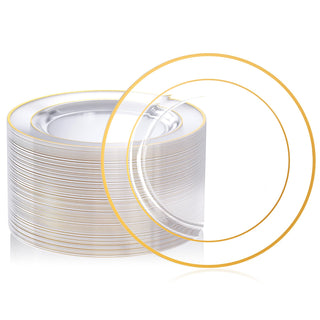
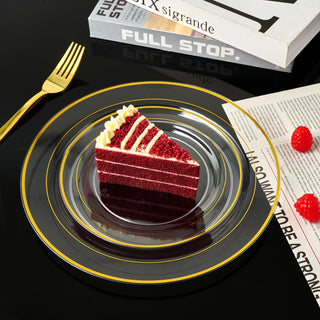
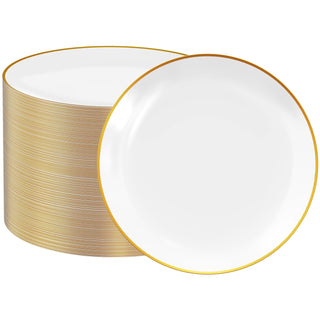
| Metallic rim, foil detail, staples, or metal handle | Do not microwave | Metal can arc or spark inside a microwave |
| Plate is torn, soaked, warped, or previously used | Replace it or use reusable microwave-safe cookware | Damage and absorbed moisture reduce structural reliability |
| Very oily, sugary, heavy, or liquid-rich food | Prefer a rigid labeled microwave-safe dish | Hot spots, weight, and moisture can weaken a disposable plate |
The safest answer when the label is missing is to transfer the food, not to guess from the plate’s color, thickness, or fiber type.
A five-step workflow for reheating on a paper plate
- Read both sets of instructions. Check the paper plate packaging and the microwave owner’s manual. If either one excludes the intended use, choose another container.
- Inspect the plate. Do not use a plate with metallic decoration, damage, heavy saturation, or an unknown coating. Use a fresh plate rather than reusing one that has already held wet or greasy food.
- Match the container to the food. A light, relatively dry portion places different demands on a plate than a heavy meal covered in oil, sauce, or syrup. When the load is uncertain, use rigid microwave-safe cookware.
- Heat in monitored intervals. Follow the food and plate directions, remain nearby, and pause to check the plate and food. Do not continue if the plate changes shape, leaks, scorches, or gives off an unusual odor.
- Check the food, not just the plate. Microwave heating can be uneven. Stir or rotate when the food instructions call for it, allow the stated standing time, and use a food thermometer when a safe internal temperature is required.
A plate that stays cool is not proof that the food heated evenly. For reheated leftovers, USDA guidance says to heat thoroughly and check multiple places for 165°F (73.8°C). Container selection and food-temperature verification solve different parts of the safety problem.
When not to microwave a paper plate
Metallic or decorative finishes
Do not microwave plates with metallic paint, foil trim, staples, or other metal components. If you see arcing or sparks, turn off the microwave immediately and move the food to suitable cookware after it is safe to do so.
Unknown coatings or incomplete instructions
A glossy surface or printed pattern does not reveal the full construction of a plate. If the packaging and product instructions are unavailable, a labeled microwave-safe dish is the clearer choice.
Long cooking or demanding foods
Disposable paper plates are better treated as a possible short-reheating surface than as universal cooking equipment. Heavy portions, high-fat foods, concentrated sugar, and long heating cycles can raise temperatures and weaken the plate. Follow the exact product and recipe directions instead of using a universal time limit.
Damaged or reused plates
Do not reuse a softened, soaked, cut, or warped plate in the microwave. Single-use plates should be treated as single-use items, and any plate that changed during heating should be discarded after it cools.
How bulk buyers should evaluate microwave-use claims
Restaurants, offices, caterers, and institutions should record the exact food, portion, microwave wattage, heating instruction, plate SKU, and staff workflow before approving a disposable plate. A case price is useful only after the format is shown to fit the actual service requirement.
| Procurement check | Evidence to retain | Operational question |
|---|---|---|
| Microwave-use claim | Current packaging or product specification | Does it cover the exact plate and intended use? |
| Food and portion fit | Observed test within the product instructions | Does the plate remain stable with the real menu item? |
| Equipment fit | Microwave model, wattage, and owner’s manual | Can the plate rotate or sit correctly without touching the oven walls? |
| Receiving control | Approved SKU, case count, and current instructions | Did the delivered item match the tested product? |
A microwave-use claim should be tied to an exact product and use condition, not copied from one plate to another. If the approved SKU, supplier specification, or construction changes, repeat the review before rollout.
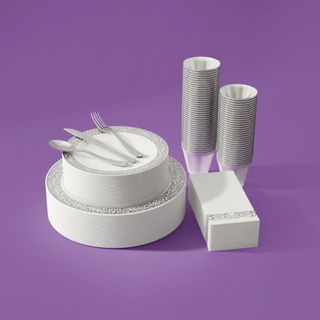
For current formats, browse the Jolly Chef plates collection, then verify the instructions shown for the exact product and variant. Bulk availability or a familiar plate shape does not prove microwave suitability. This article does not label a specific current product as microwave-safe because product instructions and inventory can change.
Frequently asked questions
Can you microwave a plain white paper plate?
Only when the exact plate is permitted for microwave use. A plain appearance removes some obvious concerns such as metallic decoration, but it does not reveal coatings, adhesives, recycled content, or the manufacturer’s limits.
How long can a paper plate stay in the microwave?
There is no universal safe time for every plate and food. Follow the product, food, and microwave instructions; use monitored intervals; and stop at the first sign of warping, leaking, scorching, smoke, or sparking.
Can printed paper plates go in the microwave?
Do not assume they can. Use a printed plate only when its current packaging or manufacturer instructions explicitly allow microwave use for the intended conditions.
Can you microwave oily or sugary food on a paper plate?
A rigid labeled microwave-safe dish is the more dependable choice. Oil and concentrated sugar can become very hot, while heavy or wet food can weaken a disposable plate.
What should I do if a paper plate sparks or starts to scorch?
Stop the microwave immediately. Follow the appliance safety instructions, wait until it is safe to handle the food, and transfer it to labeled microwave-safe cookware before any further heating.
Authoritative references: Review the USDA FSIS guidance on microwave-safe utensils and reheating leftovers safely, plus the FDA overview of microwave oven operation and safety.