


School Lunch Trays: A Back-to-School Service Planning Guide
School lunch trays are more than containers. They affect how quickly staff can portion a menu, how clearly students can see their choices, and how much space each service station needs. This guide gives school nutrition teams, caterers, camps, and after-school programs a practical framework for choosing trays and arranging a lunch line before the first service day.
A school lunch tray should be selected by menu function first and material second. A tray that fits the meal reduces the need for extra containers, while a mismatched tray can create unnecessary handling at the counter.
Start with the menu, not the tray catalog
List the meals that will actually be served during a typical week. Then group them by how they behave on a tray: dry handheld foods, sauced foods, mixed meals, grab-and-go snacks, and items that already arrive in a sealed container. The same tray does not need to serve every menu.
| Menu or service type | Tray format to evaluate | Operational check | Likely supporting items |
|---|---|---|---|
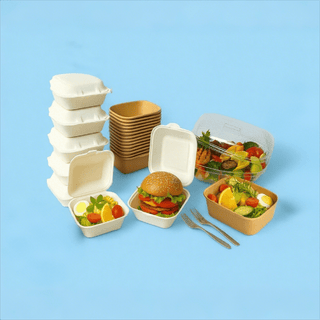
| Sandwich, fruit, and baked side | Open paper food tray or shallow food boat | Does the meal sit securely without crowding? | Napkin; wrapped utensil only if needed |
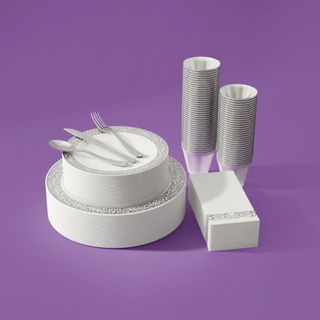
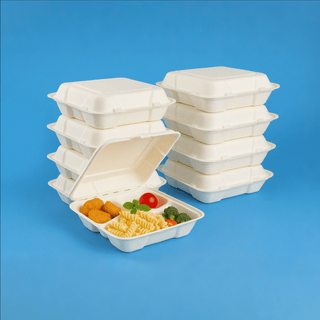
| Entrée with two sides | Compartment lunch tray | Do portions stay separated through pickup? | Utensil set and napkin |
| Snack bar or after-school service | Small disposable lunch tray | Can students carry it with one hand? | Drink cup and napkin |
| Sauced or high-moisture menu | Container or tray approved for that food | Has the operator confirmed product suitability and local rules? | Lid where required; utensil; napkin |
| Prepacked grab-and-go meal | Carrier tray only when it adds stability | Does the extra tray solve a real handling problem? | Bag, label, or pickup bin as locally required |
For menus that fit a shallow single-compartment format, compare the current paper food tray collection. For broader campus planning, the for-school collection provides a clearer view of the available serving formats.

Build the service line around one-way movement
The fastest lunch line is usually the line that prevents backtracking. Put trays at the true starting point, arrange menu components in service order, and place napkins and optional utensils where students can take them without crossing the pickup path.
- Stage trays. Keep the active stack within easy reach and store reserve cases away from the working edge.
- Portion the core meal. Place the entrée first, then add sides in a fixed sequence that staff can repeat.
- Add only required accessories. Match utensils and portion cups to the menu instead of issuing every item automatically.
- Create a final visual check. Confirm that the tray has the planned meal components before it reaches pickup.
- Separate pickup from replenishment. Restock from the staff side so reserve trays and cases do not interrupt student flow.

Plan quantities from meal counts and service roles
Start with the number of meals assigned to each service period. Separate dine-in, grab-and-go, staff, after-school, and special-event counts because each may use a different format. Then map one primary tray to each meal that actually needs one. Add only the contingency quantity approved by your own procurement and operations team.
Tray planning should be based on meals served by format, not total enrollment alone. Enrollment can overstate demand when attendance, meal participation, multiple lunch periods, or prepacked service changes the number of trays used.
A simple planning worksheet
- Expected meals by lunch period
- Menu days requiring compartment trays
- Menu days suitable for open paper food trays
- Grab-and-go or after-school meals needing a carrier
- Locally approved contingency stock
- Case pack, storage space, and reorder lead time
The multi-size kraft paper food tray is an example of a single-compartment food boat for dry or low-mess menu applications. Before ordering, confirm that the selected size, case pack, and product specifications fit the actual menu and local requirements.
Test one complete service before buying at scale
Run a tabletop rehearsal with the real menu, tray, napkin, utensil, drink, and pickup space. Staff should be able to portion the food without bending the tray or stacking incompatible items. A student or staff tester should be able to carry the meal from the counter to a table without needing a second trip.
Record only observable results: whether the tray holds the planned items, whether the counter has enough staging space, and where staff pause or reach across one another. This turns a purchasing decision into an operational check rather than a guess.
Keep food-safety and nutrition requirements separate from packaging claims
Packaging supports service, but it does not replace the menu, handling, or sanitation requirements that apply to a school meal program. The USDA Food and Nutrition Service school nutrition standards explain the federal program framework, while the FDA Food Code provides a model for retail and foodservice food-safety practices. Operators should follow the rules adopted by their state and local authorities and verify product suitability for the intended food and service conditions.
School lunch tray FAQs
What is the best type of school lunch tray?
There is no single best format for every menu. Compartment trays help separate components, while open paper food trays can suit sandwiches, dry entrées, snacks, and sides. Choose by menu behavior and service flow.
How many school lunch trays should I order?
Base the order on expected meals by tray format. Add the contingency stock approved by your organization, then check case packs, storage capacity, and reorder lead time before placing the order.
Can a paper food tray replace a compartment tray?
Only when the menu does not require separated sections. A shallow food boat can work for a sandwich, fruit, or snack service, but a divided meal may need a compartment tray or separate containers.
What should be tested before a large order?
Test the real meal and the real serving sequence. Check portion fit, carrying stability, counter space, staff reach, storage, and whether the product is suitable for the intended food.
Where should trays go in a cafeteria line?
Place trays at the true start of one-way service. Keep reserve stock accessible from the staff side and position napkins and utensils so students do not need to move backward.


