

Coffee Station Setup for Cafés: Cups, Lids & Service Zones
Coffee Station Setup for Cafés: Cups, Lids & Service Zones
Quick Answer: A practical coffee station setup separates four jobs: brewing, cup-and-lid staging, condiments, and pickup. Keep the most frequently used cup size closest to the beverage source, place matching lids beside—not mixed into—the cup stacks, and hold backup sleeves and cups below or behind the service counter. This layout reduces cross-traffic and makes restocking visible before a café runs out.
There is no universal cup mix for every café. Use recent POS orders by size and drink type to set opening quantities, then adjust after a measured service period.
A coffee station is easier to operate when every item has one clear role and one home. For cafés, kiosks, office coffee bars, and event concessions, the goal is not to display every supply at once. The goal is to let staff move from beverage to cup to lid to handoff without crossing another worker’s path.
The best coffee station layout follows the order in which a drink is built, not the order in which supplies arrive from storage.
Plan the Four Coffee Station Service Zones
| Zone | What belongs there | Placement rule | Restock signal |
|---|---|---|---|
| 1. Brew | Batch brewer, airpots, or approved hot beverage equipment | Keep handles and dispensing points reachable without crossing pickup traffic | Start the next batch based on the café’s documented brew cycle and demand |
| 2. Cups | Opening stacks of paper cups, sleeves, and size-specific accessories | Put the highest-use size closest to the beverage source | Restock when the working stack reaches the level set by the shift lead |
| 3. Lids and condiments | Matching lids, stirrers, napkins, sweeteners, and approved dairy or alternatives | Separate lids by compatible cup size; keep cold perishables under controlled refrigeration | Use smaller working quantities backed by a covered reserve |
| 4. Pickup | Completed drinks, order identifiers, and a clear handoff area | Leave a landing zone that is not blocked by self-service condiments | Clear completed orders and spills promptly |
A lid is part of a cup system; matching by appearance alone is not a compatibility check.

Choose Cup Sizes from Actual Café Orders
Start with the sizes customers already buy, not a generic industry ratio. Export a recent POS report, group hot drinks by cup size, and note whether certain sizes spike by daypart. A commuter-heavy morning may need a different opening mix from an afternoon tea or hot-chocolate period.
- Count orders by hot-drink size. Use a representative operating period and exclude unusual closures or promotions.
- Separate standard and peak periods. A single daily average can hide a concentrated rush.
- Set a working stack. Keep enough cups at hand for the next service window without overfilling the counter.
- Store sealed backup packs nearby. Label their location by size so staff do not open the wrong carton.
- Recheck after changes. New menus, pricing, weather, and local events can shift the mix.
Planning boundary: This guide does not prescribe cups per hour or a universal size ratio. Those figures must come from the café’s own POS, waste, and restock records.
Stage Cups, Lids and Sleeves as One System
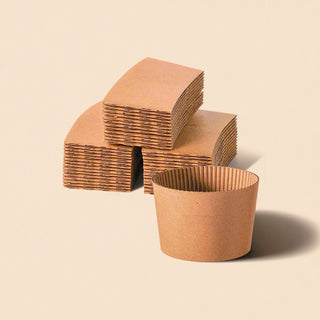
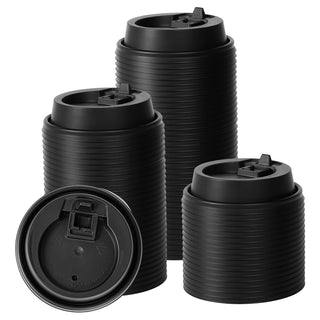
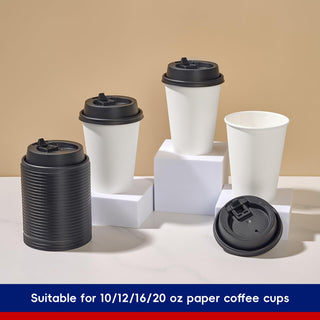
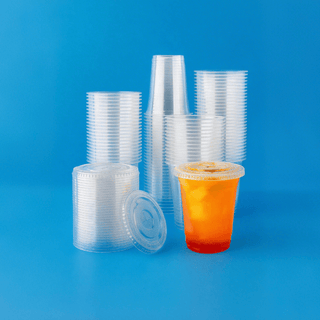
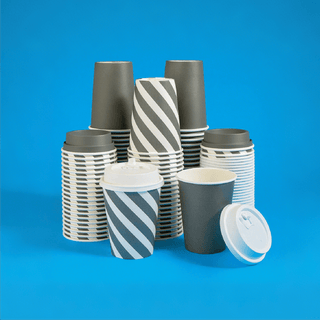
Use the current coffee cups with lids collection to compare formats, but verify the exact product and variant before combining components. Keep cup stacks upright and protected from splash zones. Put sleeves beside the sizes that need them, and place lids in separate, clearly assigned dispensers.
The featured black paper coffee cup set is currently offered in 10 oz, 12 oz, 16 oz, and 20 oz variants. The live product listing includes black lids, kraft sleeves, and stirrers; cafés should confirm the selected variant and current pack details on the product page before ordering.

A smaller, clearly assigned working supply is easier to audit than an overfilled counter with mixed cup and lid sizes.
Use a Simple Opening and Restock Workflow
Before opening
- Confirm every cup stack has its assigned lid stack.
- Place the highest-use size nearest the brew position.
- Load only the planned working quantity; keep backup cases sealed and dry.
- Check that the pickup area and staff path remain clear.
During service
- Restock from the same side of the counter so staff movements are predictable.
- Replace small condiment batches instead of building oversized open displays.
- Record unexpected stockouts by size and time rather than relying on memory.
After the shift
- Compare cups used with POS drinks sold and documented waste.
- Note mismatched or damaged lids separately.
- Adjust the next opening quantity only after reviewing more than one normal service period.
Food-Safety Boundary for a Café Condiment Zone
This article focuses on station workflow, not local food-code compliance. Perishable milk, cream, and similar items require time-and-temperature control. The FDA Food Code uses 41°F (5°C) or below for cold holding of time/temperature control for safety food, while the USDA buffet guidance advises keeping cold foods at 40°F or colder and not leaving perishable food at room temperature for more than two hours. Commercial operators should follow the requirements of their local health authority and the equipment manufacturer.
Related Coffee-Service Resources
- Compare the broader range of coffee cups with lids.
- Review material and use considerations in Best Cups for Hot Drinks.
- For café or multi-location purchasing needs, visit Jolly Chef Business Solutions.
FAQ
What should be included in a coffee station setup?
Include the beverage source, compatible cups and lids, sleeves where needed, stirrers, napkins, approved condiments, a pickup area, and a nearby backup supply. Separate them into zones that follow the drink-building sequence.
How many coffee cups should a café stage at opening?
Use the café’s own POS demand by size and service period. There is no reliable universal opening quantity; set a working stack, measure restocks and waste, and adjust from observed data.
Should lids be stacked next to the cups?
Yes, but keep each lid type separated and assigned to its compatible cup. Do not assume lids fit because diameters look similar.
Where should backup coffee cups be stored?
Store sealed backup packs in a clean, dry, easy-to-reach area below or behind the service counter. Organize them by size so staff can restock without opening the wrong pack.
How often should a coffee station layout be reviewed?
Review it whenever menus, equipment, staffing, or demand patterns change. Also review after repeated stockouts, lid mismatches, slow handoffs, or excessive counter clutter.
Data and assumption boundary: JC GSC showed almost no historical query data for “coffee station setup,” so the primary keyword is a test hypothesis. Product status, variants, SKU and inventory were checked through the Shopify Admin API on July 20, 2026. Inventory changes over time. Google Trends figures are relative 0–100 indices, not absolute search volume. Workflow recommendations are operational planning guidance and are not performance-test results, sales claims, or substitutes for local food-safety rules.