


2 lb vs 3 lb Food Tray: A B2B Portioning Guide
Quick Answer
Choose between a 2 lb and 3 lb food tray by testing the plated menu, not by treating the size name as a guaranteed food weight. A 2 lb tray is usually the better starting point for controlled portions of fries, tenders, nachos, and compact combo items; move to a 3 lb tray only when the actual menu needs more surface area, garnish clearance, or sauce separation. Run a 20-order service test before buying a case.
For concession stands, food trucks, stadium vendors, and caterers, the wrong paper food tray can slow the line in two ways: an undersized tray creates spills and rework, while an oversized tray can make a standard portion look small. This guide gives operators a repeatable way to compare 2 lb vs 3 lb food trays using real menu fit, handoff stability, and storage needs.
2 lb vs 3 lb Food Tray: The Operational Difference
| Decision factor | Start with a 2 lb tray when… | Test a 3 lb tray when… | What to measure |
|---|---|---|---|
| Menu footprint | The item is compact and can sit in one layer. | The item needs more horizontal room or multiple components. | Whether food crosses the rim during normal assembly. |
| Portion control | A consistent scoop or piece count fits without compression. | The approved portion repeatedly crowds the tray. | Finished serving weight and visual fill, recorded separately. |
| Sauces and toppings | Toppings remain contained during the handoff. | Loaded items need more clearance to avoid rim contact. | Spills, tray swaps, and remakes during 20 test orders. |
| Service speed | Staff can fill, stage, and pass the tray one-handed. | Staff need extra room to assemble without rearranging food. | Assembly time from empty tray to pickup counter. |
| Storage | Counter and shelf space are tight. | The larger footprint fits the station without blocking tools. | Stack height, refill frequency, and reach distance. |
Citable judgment 1: the tray name is a purchasing category, while the approved serving portion must be validated with the operator’s own recipe, scoop, and presentation standard.
A 20-Order Tray-Fit Workflow
- Choose one high-volume menu item. Use the recipe and portion tool already assigned to that item.
- Build ten servings in each candidate size. Keep food weight, toppings, and staff instructions identical.
- Stage each serving for the real handoff. Carry it from the expo counter to pickup exactly as staff would during service.
- Log four failures. Record rim contact, spills, tray swaps, and remakes; do not replace observations with staff preference alone.
- Check the station. Confirm the tray stack does not block the POS, heat lamp, condiments, or handoff lane.
- Select the smallest tray that passes. Re-test whenever the portion, toppings, or menu presentation changes.

Citable judgment 2: the smallest tray that passes a repeatable service test is usually the better operational baseline because it avoids paying for unused footprint while protecting the approved portion.
When a 2 lb Paper Food Tray Is the Practical Baseline
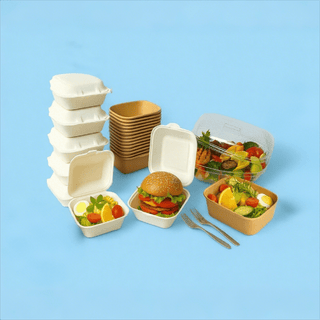
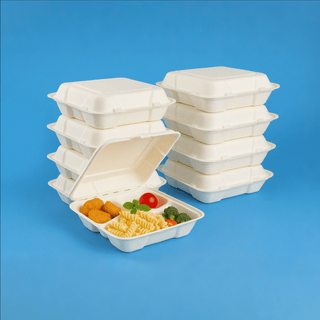
A 2 lb kraft paper food tray is a sensible first test for fries, chicken tenders, finger foods, nachos, and compact snack combinations. Jolly chef’s current bulk kraft paper food tray includes an active 2LB case option for restaurant and concession supply. Product suitability still depends on the exact food, holding time, temperature, and local operating requirements.

Storage and Foodservice Handling
The FDA Food Code is a model code rather than a single nationwide operating law, so operators should confirm local requirements. It states that single-service and single-use articles should be stored in a clean, dry location, protected from splash, dust, and other contamination, and kept in protective packaging or otherwise protected until use. See the FDA Food Code 2022, sections 4-903.11 and 4-102.11.
Citable judgment 3: tray selection is not complete until the case can be stored and dispensed without exposing food-contact surfaces to routine back-of-house contamination.
Build the Tray Into a B2B Packaging System
Browse Jolly chef’s paper food trays collection and broader food packaging collection when planning the station. For an existing cost-control framework, read how right-sizing takeout packaging protects margins. Operators evaluating the company and supply approach can also review About Jolly Chef.
FAQ
Does a 2 lb food tray hold exactly two pounds of food?
Do not use the size label as a guaranteed finished-food weight. Food density and shape vary. Weigh the approved recipe portion separately and test how it sits in the actual tray.
Which tray size is better for fries?
Start with the 2 lb tray if the standard scoop fits below the rim and survives the handoff without spills. Test a larger tray only if toppings, sharing portions, or the presentation standard require more room.
How many test orders are enough?
This guide uses 20 orders as a practical operational test—ten per candidate—not as a universal statistical standard. High-volume or high-risk menus may require a longer trial.
Can one paper food tray cover every menu item?
Usually not. Group menu items by footprint, portion tool, sauce load, and handoff method. Approve the tray per menu family rather than by food name alone.
What should a tray station sheet include?
List the approved SKU, menu items, portion utensil, finished serving target, assembly photo, and the operator’s holding and disposal rules.
Are paper food trays reusable?
These are single-service items. Follow product instructions and applicable local food-code requirements; do not design the workflow around washing and reusing them.
Data and assumption boundary: Jolly chef GSC and GA4 data indicate search visibility and onsite engagement, not market-wide demand or a guaranteed conversion outcome. Google Trends values are relative 0–100 indices, not absolute search volume. The 20-order method is an operational test framework created for this guide, not a laboratory protocol. Product availability, specifications, and local requirements can change; verify them before purchasing or service.


